 How-to
7 Steps to Prepare for College Recruiting Interviews
Last Updated: November 9, 2026
Quick Summary
Prepare for recruiting interviews by researching the program and roster, building academic talking points, and preparing questions for the coach. Practice your delivery with a call script, plan your outfit and etiquette, and send a follow-up email within a day.
- Research the team, roster, and coaching staff one to two weeks before the interview.
- Bring your GPA, test scores, and intended major as academic talking points.
- Write a five-part call script and practice it out loud two to three days before.
- Let the athlete answer first and include parents without letting them take over.
- Send a follow-up email within 24 hours thanking the coach and restating your interest.
Table of Contents
- Step 1: Research the Program Before Your College Recruiting Interview
- Step 2: Build Your Academic Profile and Talking Points
- Step 3: Questions to Ask College Coaches (and How to Answer Theirs)
- Step 4: Use a College Recruiting Call Script to Practice Your Delivery
- Step 5: Dress for the Setting and Mind Your Interview Etiquette
- Step 6: Handle Curveball Questions and Include Your Parents the Right Way
- Step 7: Send a Follow-Up Email After the Interview
- A Quick Summary of the 7 Steps
- Turn Preparation Into a Recruiting Advantage
- Frequently Asked Questions
Step 1: Research the Program Before Your College Recruiting Interview
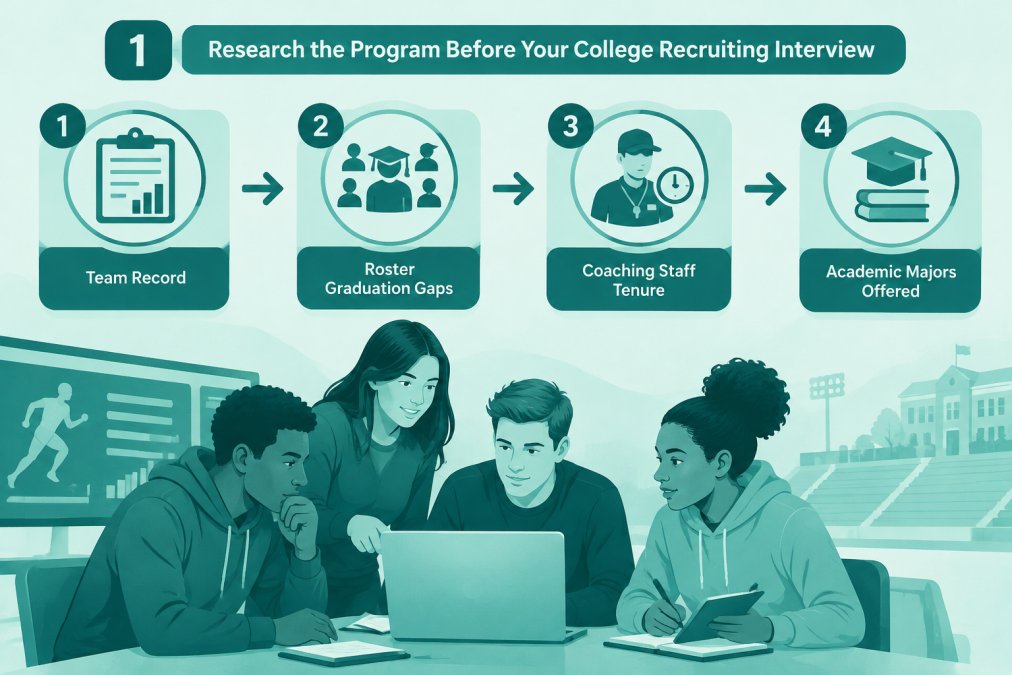
Know the program before you talk to the coach. How do you build a relationship with college coaches early? Research the team, roster, and school so your recruiting interviews start with real questions.
Start with division, conference, and recent record. Read the roster page and note which athletes graduate soon, since that can signal where a roster spot may open. Check the coaching staff, too, because staff changes can affect your fit.
Step 2: Build Your Academic Profile and Talking Points
Your academic profile is half the conversation. Bring your GPA, test scores if you have them, and an intended major.
Prepare three talking points before the call:
- Your academic strengths and study habits
- How your major fits the school
- How you manage time between sports and school
If your grades dip, plan how to explain it. A short, honest answer beats an excuse. Our guide on how to explain a low GPA to college coaches walks through the right framing. For checklists, timelines, and outreach examples, use our college recruiting resources.
Step 3: Questions to Ask College Coaches (and How to Answer Theirs)
Ask questions that show you understand the program: team culture, practice schedules, academic support, and what the coach expects from freshmen.
Try these:
- What does a typical week look like for a freshman?
- How does the staff support athletes academically?
- What role do you see for my position in the next two years?
Coaches will ask about your goals, work ethic, and how you handle setbacks. Answer honestly and keep it short. For a deeper list, read our guide on questions to ask college coaches during recruiting visits.
Step 4: Use a College Recruiting Call Script to Practice Your Delivery
A college recruiting call script keeps you calm and on message. Write five parts: your opening, academic stats, questions, answers, and close. Practice out loud with a parent or coach, and record it on your phone to watch back.
Don't read the script word for word. It should guide you, not replace a real conversation. For more on preparing for a coach call, see how to prepare for a college coach phone call.
Step 5: Dress for the Setting and Mind Your Interview Etiquette
What you wear depends on the format. For a virtual call, wear a clean, solid shirt and check your background. For an in-person meeting, dress neat and simple. Etiquette matters more than your outfit: join early, look at the camera, and listen before you answer. A calm, attentive approach matters as much as polished answers, and Evidentcareerstudio can help you think through interview preparation with the same care.
Step 6: Handle Curveball Questions and Include Your Parents the Right Way
Coaches sometimes ask unexpected questions to see how you think. If you get one, pause, breathe, and answer honestly. You can say, "Let me think about that for a second."
Parents play a role, but the athlete leads. Let your child answer first. A parent who takes over the call sends the wrong signal.
Step 7: Send a Follow-Up Email After the Interview
Send a follow-up email within a day. Thank the coach, mention one thing you discussed, and restate your interest.
A simple template:
Dear Coach [Last Name], thank you for your time today. I enjoyed learning about [specific topic]. I'm excited about the opportunity to contribute at [school]. Please let me know any next steps. Sincerely, [Full Name]
A Quick Summary of the 7 Steps
| Step | What to Do | When |
|---|---|---|
| 1 | Research the program and roster | 1-2 weeks before |
| 2 | Build your academic talking points | 1 week before |
| 3 | Prepare questions and answers | 1 week before |
| 4 | Practice with a call script | 2-3 days before |
| 5 | Plan your outfit and etiquette | Day before |
| 6 | Handle curveballs, include parents | During the call |
| 7 | Send a follow-up email | Within 24 hours |
Turn Preparation Into a Recruiting Advantage
Preparation is the edge most athletes skip. You now have a clear plan for every college recruiting interview, including recruiting interviews that happen by phone or video.
Recruit My Game can support that work. The platform uses AI to identify programs with roster needs for your position, and it includes tools for building an athlete profile and creating a QR business card. A Free plan is available for building a complete athlete profile.
Get started with Recruit My Game and walk into your next interview ready.
Frequently Asked Questions
What should I expect in a college recruiting interview with a coach?
Expect a conversation, not an interrogation. Coaches usually open with background questions about your position, GPA, and graduation year, then ask about your academic profile, team culture fit, and career goals. They may also describe their program, roster spot availability, and recruitment timeline. Come with your own questions to ask college coaches, and treat it as a two-way evaluation. Most calls run 15 to 30 minutes; campus visits may include a longer sit-down with the coaching staff.
Should parents attend a college recruiting interview?
For phone or video calls, parents should stay nearby but let the student-athlete lead. Coaches want to hear the recruit speak directly about goals, academic eligibility, and interest in the program. On campus visits, parents often join the academic advisor meeting and the closing conversation about scholarship opportunities, but the athlete should handle most of the coach conversation. Agree on roles beforehand so no one talks over anyone.
How do I follow up with a college coach after an interview?
Send a college coach interview follow-up email within 24 hours. Thank the coach for their time, reference one specific detail from the conversation (a facility, a team culture point, or a roster need), restate your interest, and attach or link your film and academic profile. Keep it under 150 words and proofread before sending. If you do not hear back in two weeks, a brief second note is fine; avoid repeated messages.