 blog
blog
Questions to Ask College Coaches During Recruiting Visits
Table of Contents
- Why the Questions You Ask College Coaches Matter More Than Your Highlight Reel
- Questions to Ask College Coaches About Playing Time
- Questions to Ask College Coaches About Team Culture
- Your College Recruiting Visit Checklist: Before, During, and After
- Official vs. Unofficial Visits: What Changes and What You Should Ask
- College Coach Recruiting Conversation Examples You Can Steal
- Questions to Avoid and Red Flags That Should Make You Pause
- Conclusion
- Frequently Asked Questions
Last Updated: October 17, 2026
Why the Questions You Ask College Coaches Matter More Than Your Highlight Reel
Most families walk into a recruiting visit with a highlight reel queued up and almost no plan for the conversation, and that's a mistake we see constantly at RecruitMyGame. Film gets you noticed, but the questions you ask college coaches during recruiting visits are what tell a staff whether you're serious, prepared, and genuinely interested in their program rather than just collecting offers, and the families who treat a visit like a two-way interview leave with real information instead of a vague good feeling and a branded lanyard.
Questions to Ask College Coaches About Playing Time
The best questions to ask college coaches about playing time are the ones that force a specific answer instead of a polite one, because "you'll get a chance to compete" sounds great until you realize it means nothing. Instead of asking whether you'll play, ask how the staff sees your position shaking out over the next two to three seasons. Try these:
- How many athletes at my position are on the roster right now, and how many graduate or leave in the next two years?
- Are you recruiting anyone else at my position in my class, and where do I sit on that board?
- What separates the players who get on the field early from the ones who wait?
- Have you redshirted players at my position recently, and what does that year look like?
- What would I need to show in my first fall to earn real reps?
Reading Between the Lines on Depth Charts and Redshirts
When a coach dodges the roster question or gives you a "we'll see," that's information too, and it usually means the depth chart is crowded or they haven't evaluated you closely yet. Ask directly how many players at your spot are returning, and listen for whether they name specific names and years. We built RecruitMyGame's matching around exactly this problem, because roster data, graduation timelines, and coach tenure tell you more about real opportunity than any brochure ever could.
Questions to Ask College Coaches About Team Culture
The questions to ask college coaches about team culture matter because culture quietly determines whether you thrive or transfer out after one season. Coaches will always describe their program as a family, so ask what a typical week looks like for a freshman, how the staff handles a player who's struggling, what happens when someone breaks team rules, and who the captains are this year, since the answers reveal whether the culture is genuinely player-led or just a slogan on a locker room wall.
What Current Players and Staff Will Tell You That Coaches Won't
Current athletes are your best source of honest information, and most recruits never think to ask them anything beyond "do you like it here." Pull a player aside and ask what surprised them most about the program, how many hours a week they actually spend on their sport, and whether the coaching staff is the same on a Tuesday as it is on game day, then ask an assistant coach or academic advisor about tutoring and what happens when a player's schedule gets overloaded, because those ten minutes often tell you more than a formal meeting with the head coach does in an hour.
Your College Recruiting Visit Checklist: Before, During, and After
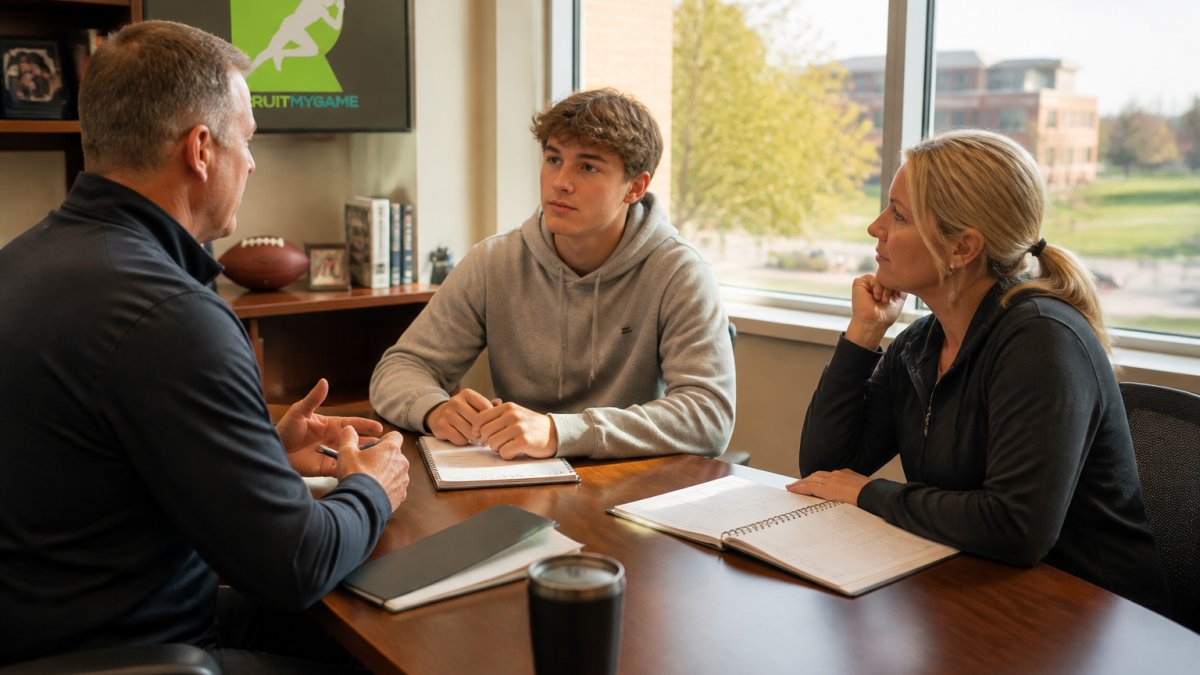
A college recruiting visit checklist keeps you from wasting the one shot you get to make a first impression in person, and it's the difference between a recruit who looks organized and one who looks like they just showed up.
Before the visit:
- Research the roster, graduation losses, and coaching staff history for your position
- Write down 8-10 questions and rank them by importance
- Prepare a short, honest answer to "why our program?"
During the visit:
- Ask your top questions early, while everyone is fresh
- Take notes, even if it feels awkward, because you'll forget half of it
- Talk to at least one current player and one staff member outside the coaching staff
After the visit:
- Send a short thank-you note within 48 hours
- Write down your honest impressions while they're fresh
- Follow up on anything the coach said they'd send you
That follow-up step is where most recruits drop the ball, and a simple, thoughtful message can separate you from a dozen other athletes who never bothered.
Official vs. Unofficial Visits: What Changes and What You Should Ask
Official and unofficial visits are not the same experience, and knowing the difference changes what you should ask and how you should prepare.
| Visit Type | Who Pays | Best For | What to Ask |
|---|---|---|---|
| Official | The school | Deep evaluation late in recruiting | Academic support, roster plans, staff access |
| Unofficial | Your family | Early interest and honest campus feel | Culture, schedule, player experience |
On either visit, ask about academic resources, tutoring, and how the athletic department supports athletes who want a demanding major. Those answers matter as much as the depth chart, and they're the ones families most often forget to ask about until it's too late.
How Visit Type Changes Who You Should Ask
The biggest mistake recruits make is treating every conversation on a visit the same way, when the setting should dictate who you ask and what you ask them. On an official visit, you usually get more structured access to the head coach, position coach, academic advisers, and current players, so split your questions by audience: save roster and playing-time questions for the position coach, academic and support-service questions for the academic adviser, and culture and daily-life questions for current players.
What to Expect Logistically on Each Visit Type
Official visits usually come with a defined schedule that may include meals, facility tours, meetings with academic staff, and time with player hosts, and the school covers those costs within the rules the NCAA sets for official visits. Unofficial visits are more flexible and more self-directed, so you may only get a brief meeting with a coach and a walk around campus, which means you need to plan your own access to players and staff.
Questions That Fit Each Visit Setting
On an official visit, use the deeper access to ask about roster plans by class year, how the staff handles redshirts and position battles, what academic support looks like for your intended major, and how injury care and mental health resources work in practice. On an unofficial visit, focus on what a typical week looks like for a freshman, how players describe the coaching staff on a normal Tuesday, and whether the campus feels like a place you could live for four years.
College Coach Recruiting Conversation Examples You Can Steal
Real college coach recruiting conversation examples help because most recruits freeze up when a coach puts them on the spot, and having a few lines ready keeps you from sounding like a robot reading a script. Adapt these to your own voice.
- Opening the visit: "Thanks for having me out. I've been following the program and I'm excited to see how the team operates day to day."
- Asking about fit: "Based on what you've seen from my film, where do you see me fitting into the system, and what would my first year look like?"
- Asking about development: "What does player development look like for someone at my position, and who would I be working with most directly?"
The goal isn't to sound polished, it's to sound like someone who's done their homework and genuinely wants to be there.
Questions to Avoid and Red Flags That Should Make You Pause
Some questions hurt you the moment they leave your mouth, and knowing which ones to skip is just as important as knowing what to ask.
Red flags are just as worth watching for. A coach who can't name players at your position, a staff that seems disorganized or dismissive, or a program where current players won't make eye contact with the coaches are all worth noting.
How to Tell a Specific Answer From a Vague One
The skill that separates prepared families from hopeful ones is learning to hear the difference between an answer that is specific and one that is designed to sound good without committing to anything. A specific answer usually includes names, years, numbers, or a clear process, such as a coach saying, "We have two juniors at your position, one graduates in the spring, and we are recruiting one player in your class to compete for that spot," while a vague answer sounds like, "You'll have every opportunity to compete" and often means the staff has not evaluated you closely or does not want to commit to a plan.
Verifying Promises About Playing Time, Roster Spots, and Scholarships
Verbal assurances are not commitments, and the families who get burned are usually the ones who heard what they wanted to hear and never checked. If a coach suggests you will have a roster spot or scholarship, ask what the next step is in writing and when you can expect it, because a real offer comes with a defined process and a timeline.
Red Flags Worth Writing Down
Beyond the obvious ones, watch for a staff that cannot tell you who your academic adviser would be, a program where current players seem afraid to answer questions honestly, a coach who speaks negatively about other programs or other players, and a visit where nobody outside the coaching staff is available to talk. Pay attention to how the staff treats the players who are not stars, because that is often a preview of how they will treat you when you are struggling, and write down your concerns during the visit instead of trusting your memory, since a red flag you noticed in the first ten minutes is usually worth a second conversation before you commit.
Conclusion
The recruiting visit is one of the few moments in the process where you control the conversation, and the questions you bring decide whether you walk away with real answers or a pile of vague promises. RecruitMyGame was built to help athletes walk into that room already knowing which programs have a genuine need at their position, with AI-powered roster matching, verified coach reviews, and analytics that show you where the real opportunity is before you ever step on campus.
Frequently Asked Questions
What are the most powerful questions to ask a college coach during a recruiting visit?
The strongest questions force a specific answer instead of a sales pitch. Ask about the recruiting needs for your class and position, how many players at your spot are graduating, and what a typical freshman year looks like in terms of playing time and development. Follow up with a question about what specific skill the coach thinks you need to improve before arriving on campus, because the answer tells you whether they have actually watched your film or are just being polite.
How do I ask college coaches about playing time without sounding arrogant?
Frame the question around development and fit rather than immediate starts. Instead of asking if you will play right away, ask how the staff typically brings freshmen along at your position and what the depth chart looks like over the next two seasons. Coaches respect direct questions when they are tied to the team's needs, so mention that you want to understand where you fit in the roster plan and what you need to prove to earn reps.
What should I ask about team culture that coaches won't spin?
Save the culture questions for current players and support staff, not just the head coach. Ask players what a typical week looks like, how captains handle conflict, and whether the coaching style stays consistent after a loss. When you do ask coaches about culture, request specific examples of how they have handled a player who was struggling, because concrete stories are much harder to dress up than general statements about family and accountability.
How should I follow up after a college recruiting visit?
Send a short thank-you email within 24 to 48 hours that references something specific from the visit, such as a conversation about the team's training schedule or a facility you toured. Reiterate your interest, restate one or two things you learned about the program's needs, and ask any follow-up question that came up after you left. This is also the moment to update your recruiting profile and film so the coach has fresh context when they review their board.