 How-to
What Classes College Coaches Value Most in Recruits
Quick Summary
College coaches care first about whether a recruit can play in college, which depends on meeting NCAA Eligibility Center academic standards. Beyond eligibility, coaches weigh course rigor, so honors, AP, and IB classes signal readiness for college work more than good grades in standard classes alone.
- Completing a set number of approved core courses in high school is the first eligibility filter.
- Honors, AP, and IB classes signal readiness for college work and carry high weight.
- Strong grades in standard courses still count but carry less weight on their own.
- Send coaches a clean, current transcript with core course progress, GPA, and test scores if available.
Table of Contents
- College Athletic Eligibility Academic Requirements
- How Student-Athlete GPA and Course Rigor Shape Recruiting
- Preparing Your Academic Transcript and Outreach Email for Coaches
- Frequently Asked Questions
What Classes College Coaches Value Most in Recruits
Last Updated: November 12, 2026
College Athletic Eligibility Academic Requirements
College coaches care about one thing before anything else: whether a recruit can actually play in college. The NCAA Eligibility Center sets the core academic standards for Division I and Division II athletes, and every prospect must meet them. Meeting those standards means balancing coursework with athletic demands, so recruits should weigh whether advanced classes such as AP Chemistry fit their academic plans, with Chemistry Lessons by Annise as a useful point of reference.
Core course requirements are the first filter (NCAA Initial Eligibility Requirements - NCAA.org). Eligibility depends on completing a set number of approved core courses in high school, so a strong athlete with missing core classes can lose a spot quickly.
How Student-Athlete GPA and Course Rigor Shape Recruiting
Grades and course difficulty both matter. Coaches look at whether a recruit took demanding classes, not just whether the GPA looks good.
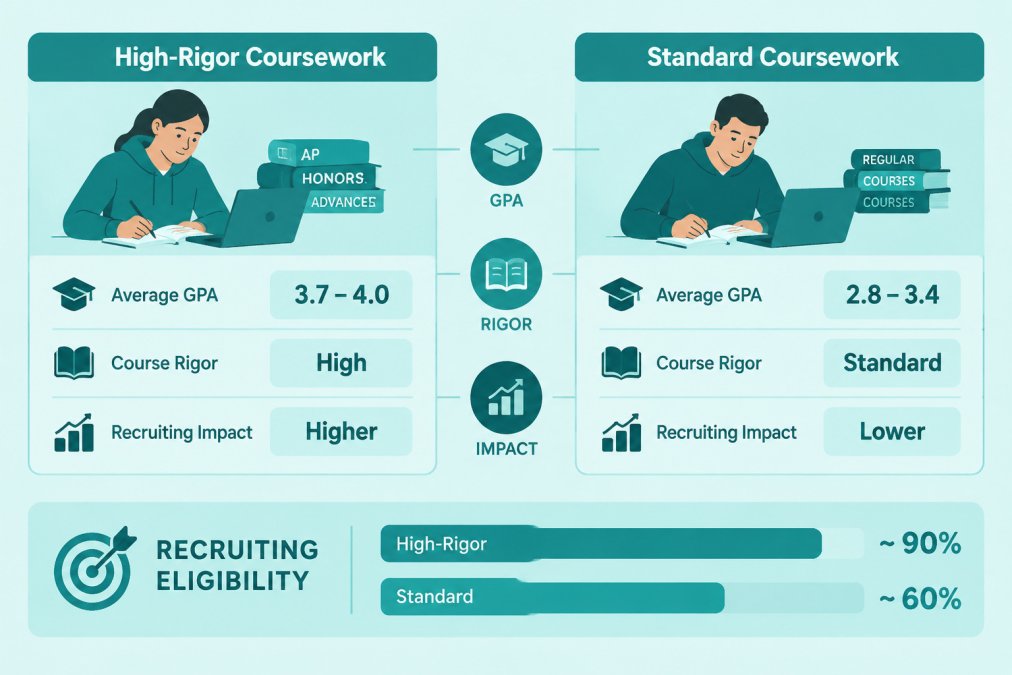
- High-rigor courses: Honors, AP, and IB classes signal readiness for college work.
- Standard courses: Strong grades in regular classes still count, but they carry less weight on their own.
Your academic profile also shapes which programs will look at you. Keep it current and easy to share.
Coaches weigh the kinds of classes a recruit takes alongside the grades earned in them.
| Course type | What it signals | Weight |
|---|---|---|
| Honors, AP, IB | Readiness for college work | High |
| Standard courses | Consistent grades | Lower on their own |
Preparing Your Academic Transcript and Outreach Email for Coaches
Send coaches a clean, current transcript along with a short email. Our guide to what to include in a recruiting email walks through each part. Include your core course progress, GPA, and test scores if you have them.
Keep the email brief and specific. Plan your timing with a college recruiting timeline for athletes. Name your position, graduation year, and the classes you are taking now. Your profile on RecruitMyGame can hold your film, stats, and academics in one place you can share with a single link.
Frequently Asked Questions
Do college coaches care about which classes you take?
Coaches care about whether your courses meet NCAA core course requirements, and many also look at how rigorous your schedule is. Taking challenging core classes such as English, math, science and social studies shows you can handle college coursework. A strong GPA in those core subjects matters as much as the number of honors or AP classes you complete, so balance rigor with performance you can sustain.
Do college coaches look at GPA or course difficulty?
Both. Coaches usually start with your GPA and test scores because they determine whether you can be admitted and certified for competition. Course difficulty adds context: a 3.4 earned in advanced classes can signal more readiness than a 3.8 in the easiest track. Coaches and admissions offices often review your transcript together, so keep your core course selection consistent with the level you can realistically succeed in.
What should student-athletes include in an email to college coaches?
Keep the email short. Introduce yourself with your name, graduating class, position and high school, then share your academic summary, including unweighted GPA and any core course highlights. Attach your highlight film and a copy of your transcript if the coach requests it. End with a specific question, such as asking about the program's needs at your position, so the coach has an easy reason to reply.