 how-to
Digital Networking Tips for Student Athletes That Work
Quick Summary
A digital networking plan for student athletes works best as a step-by-step routine. Polish your online profile with your position, stats, academics and film link, build a warm contact list, send specific first messages to a small group of fitting programs, then follow up about two to three weeks later and track every date.
- Show your position, key stats, academics, and a link to your film before reaching out.
- Build a warm contact list that includes coaches, teachers, club staff, alumni, and family friends.
- Send specific notes to a small group of fitting programs instead of a mass blast.
- Follow up about two to three weeks after your first message.
- Keep follow-ups to three or four sentences and move on after three tries.
Table of Contents
- How to Build a Digital Networking Plan as a Student Athlete
- How to Follow Up with College Coaches Without Seeming Pushy
- College Recruiting Email Template and Social Media Tips That Get Replies
- Frequently Asked Questions
How to Build a Digital Networking Plan as a Student Athlete
Think of your digital networking plan as a game plan you run every week, because posting highlights and hoping a coach notices rarely works on its own. A real plan gives you a clear path so you know who to contact, what to say, and when to follow up.
Before you reach out to anyone, make sure your online presence tells a clear story about who you are as a player and a person, with your position, key stats, academic info, and a link to your film.
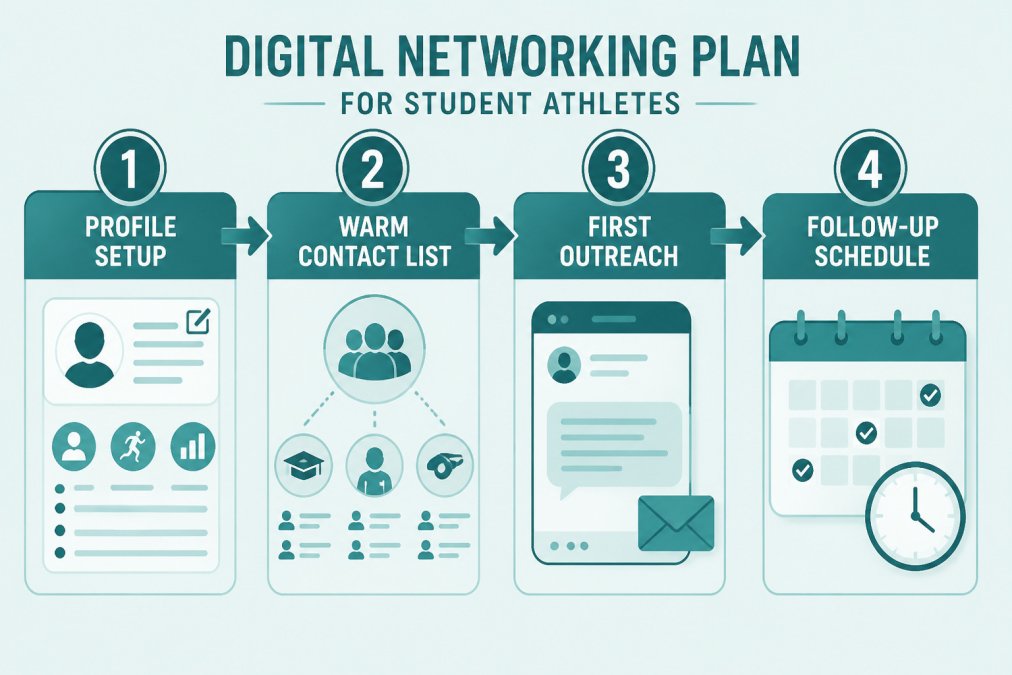
Next, build a warm contact list of people who already know you or your game, like coaches, teachers, club staff, alumni, and family friends in sports, since people who already know you or your game can share your profile or make an introduction.
Then plan your first outreach by picking a small group of programs that fit your academics, position, and goals, and send each one a short, specific note that mentions something real about their program instead of blasting the same message to 50 schools.
Finally, set a follow-up schedule. Coaches are busy, so a first message often needs a follow-up. Plan to check back about two to three weeks later. Keep track of every date in a simple spreadsheet so nothing slips through the cracks.
Here is the plan at a glance, with the timing for each step.
| Step | What to do | Time or frequency |
|---|---|---|
| Polish your profile | Show your position, key stats, academics, and a link to your film | Before any outreach |
| Build a warm contact list | Include coaches, teachers, club staff, alumni, and family friends in sports | Before any outreach |
| Plan first outreach | Pick a small group of fitting programs and send a specific note to each | Start with a small group |
| Send first messages | Mention something real about each program, not a mass blast | First contact |
| Follow up | Check back with a short message | About two to three weeks later |
| Track dates | Log every contact and follow-up in a simple spreadsheet | Ongoing |
How to Follow Up with College Coaches Without Seeming Pushy
Following up is where a lot of athletes get nervous because they don't want to annoy the coach, but a polite, short follow-up usually won't hurt you, and a friendly reminder can help you stay on a coach's radar.
Keep each follow-up short at three to four sentences, remind the coach who you are, mention one new thing, and ask a simple question.
Give it two to three weeks between messages, and if you hear nothing after three tries, move on and focus on other programs.
Pay attention to the coach's replies too, matching their tone and response speed, and if they ask for more film or a specific stat, send it right away.
Good follow-ups build trust, while pushy ones can make coaches tune you out.
College Recruiting Email Template and Social Media Tips That Get Replies
Your first email matters more than you think. Coaches skim quickly, so keep it clear and easy to scan. Before you hit send, review what a complete recruiting email should include so nothing important gets left out.
On social media, keep your posts focused on your sport and your growth. Post film clips, training updates, and team wins. Avoid anything that could make a coach think twice, and set your accounts to private if you want to limit who sees personal posts.
Be consistent. Reply to coaches quickly, keep your bio updated, and make sure your handles are easy to find and professional.
Your next step is simple: pick three programs this week and send each one a personalized message using the template above.
Last Updated: November 4, 2026
Frequently Asked Questions
How should a student-athlete contact a college coach online?
Keep the first message short and specific. Introduce yourself in one line, name your position and graduation year, and link to your highlight film or athletic profile. Mention one thing about the program that caught your attention, such as its schedule or a recent game. Ask one clear question. Send it to the coach's listed email or the recruiting staff contact, and avoid sending the same message to every school in a single day. A focused note gets read far more often than a long one.
How often should a student-athlete follow up with a college coach?
Wait about two to three weeks after your first message before following up. If you hear nothing, send one short follow-up with an update, like a new game result or an improved stat. After that, space your contact out and only write when you have something new to share. Coaches are busy, and steady updates tend to work better than frequent check-ins that feel like pressure.
How can student-athletes network online without seeming pushy?
Focus on giving before you ask. Comment thoughtfully on a coach's post, share a team highlight with credit, or ask a question about a training method. Keep your messages polite and specific, and respect it when someone doesn't reply. Treat online networking like a conversation at a camp, not a sales pitch. Most people respond well to genuine interest and clear, honest communication.