 how-to
Using AI for College Sports Recruiting: A Practical Guide
Table of Contents
- How AI Supports College-Athlete Recruiting
- Finding and Matching Athletes With Suitable Colleges Using AI
- Analyzing Athletic Performance and Potential With AI Sports Highlight Video Generators
- Crafting AI Recruiting Email Templates for College Coaches
- Understanding College Roster Needs by Position
- Selecting the Right AI College Recruiting Tools
- Privacy, Verification, and Responsible AI Use in Recruiting
- Organizing Recruiting Conversations and Prospect Data
- Frequently Asked Questions
Last Updated: October 9, 2026
How AI Supports College-Athlete Recruiting
Using AI for college sports recruiting has fundamentally changed how student-athletes get noticed, since AI tools now help you identify which colleges actually need your position, analyze your athletic performance in context, and organize your entire recruiting strategy in one place. Coaches receive thousands of recruiting messages every year and most go straight to the trash, so standing out means reaching out to programs that have a genuine need for what you bring to the field.
When you understand roster gaps, coaching stability, and academic fit before reaching out, your response rates improve dramatically. Coaches notice when a student-athlete has done their homework, and that recognition translates into actual conversations that can lead to offers.
The core advantage of using AI for college sports recruiting is efficiency combined with accuracy. You're no longer guessing which schools might want you. Instead, AI analyzes real roster data, graduation timelines, and coaching staff changes to show you programs where your position is actually a priority. This saves you months of wasted effort chasing schools that are already full at your position. Refining this targeted approach further requires integrating systems capable of automating sports coaching to ensure your development trajectory aligns perfectly with the specific tactical needs of your prospective team.
Finding and Matching Athletes With Suitable Colleges Using AI
Finding the right college fit starts with understanding what "fit" actually means, because it's not just about athletic ability but about finding a program where you'll play, where the academics align with your goals, and where the coaching staff and culture match your values. AI tools help you evaluate all three dimensions at once rather than treating them as separate decisions.
Start by inputting your athletic profile: your position, athletic performance metrics, academic GPA and test scores, and any specific preferences about location, conference, or program size. The AI then cross-references this against real roster data to identify programs that have graduation gaps or transfers leaving your position open.
Many athletes make the mistake of applying to schools based on reputation or location alone, missing that a top-ranked program might already have three All-Americans at your position and no scholarships available. AI cuts through that noise by showing you where you have the best chance of actually competing for playing time, since the algorithm looks at roster composition rather than overall program strength.
Once you've identified target programs, verify the information by checking coaching staff stability, reviewing verified coach feedback from athletes who've been through the program, and looking at recent recruiting classes to understand what the program values. This due diligence prevents the heartbreak of committing only to have the coach leave before you arrive.
Analyzing Athletic Performance and Potential With AI Sports Highlight Video Generators
Your highlight video is often the first impression a coach gets of your athletic ability, and it needs to tell a clear story about your skills and potential. RecruitMyGame helps you turn film into a recruiting powerhouse with context and analytics.
The technology analyzes game footage to identify moments where you made an impact, whether that's a tackle, a goal, a key block, or an interception, so instead of a 30-minute game film where you're on screen for five minutes of action, you get a highlight reel that showcases only your best moments and lets coaches evaluate you efficiently.
Beyond cutting highlights, AI video tools add context that makes your performance clearer by tagging plays by situation so coaches can see how you perform under pressure. That matters because a coach isn't just asking whether you can play, but whether you can play in their system, in their conference, against their level of competition.
The practical benefit is that your video becomes a recruiting asset rather than just documentation, because when you include a link to your AI-generated highlight reel in recruiting emails, you give coaches a reason to actually click and watch. The quality and presentation signal that you're serious about recruiting and understand what coaches need to see.
Crafting AI Recruiting Email Templates for College Coaches
Writing recruiting emails that actually get read requires a different approach than most athletes naturally take. Coaches receive dozens of emails daily from recruits, so your message needs to be concise, personalized, and immediately relevant to their program. RecruitMyGame helps you organize film, academics, and coach communications.
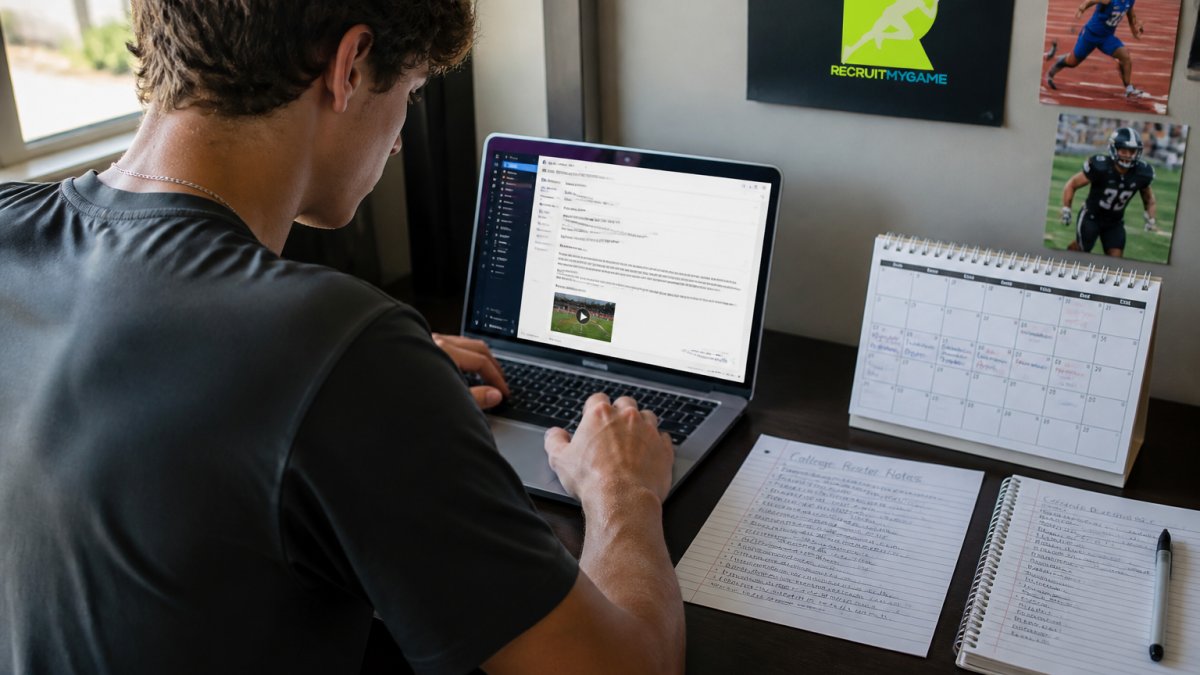
A strong recruiting email follows a specific structure: introduce yourself and your position, mention why you're interested in their specific program (not generic flattery), highlight your athletic and academic achievements, and include a link to your highlight video and recruiting profile. This helps you sound professional without sounding robotic.
The personalization piece is critical. Instead of "I'm interested in playing for your program," you might write "I've been tracking your recruiting class, and I noticed you're looking to strengthen your depth at linebacker after graduation. My film shows I excel in coverage and gap assignment, which aligns with your defensive scheme." This demonstrates you've done research and understand what the program needs. Coaches respond to athletes who clearly understand their program's specific situation.
This consistency means you're not accidentally underselling yourself to one school while overselling to another.
Understanding College Roster Needs by Position
Every college program has roster gaps that change year to year based on graduation, transfers, and recruiting classes. Understanding these gaps is where AI-powered recruiting gains its biggest advantage over traditional approaches. Instead of assuming a top-ranked program wants your position, you can verify whether they actually have a need.
Roster needs break down by position and depth level. A program might have senior starters returning at linebacker but need depth at safety. They might have a loaded recruiting class at wide receiver but are desperate for offensive linemen. These gaps shift annually based on who graduates, who transfers, and what the coaching staff prioritizes. AI tools track this data by analyzing public rosters, graduation timelines, and transfer portal activity.
When you understand roster needs, you can identify realistic opportunities, since a three-star athlete might have zero chance at a program loaded with five-star recruits at that position but could be a priority recruit where that position is thin.
The secondary benefit is timing your outreach strategically, because if a program has seniors graduating at your position, they'll be actively recruiting it the following year, and reaching out at the right time in the recruiting calendar increases the likelihood your message gets attention. Coaches are more responsive when they're actively filling roster gaps than when they're already satisfied at that position.
Selecting the Right AI College Recruiting Tools
Not all recruiting platforms offer the same features or level of data accuracy, so choosing the right tool matters for your recruiting success. The best AI college recruiting tools combine roster analysis, coach verification, video hosting, and recruiting communication in one integrated platform.
Look for tools that provide verified coach reviews from actual student-athletes who've experienced the program, since unverified reviews can be misleading when a parent trashes a legitimate program because their kid didn't get playing time. Verified reviews give you honest insight into coaching style, academic support, and what the recruiting process actually looks like.
Roster data accuracy is another critical factor, so the tool should pull directly from official college athletic websites and update regularly as programs add transfers or lose players to the draft. Outdated roster information leads you to chase programs that have already filled your position.
Video hosting and analytics matter too, so look for tools that let you upload your highlight reel, see how many times coaches watched it, and track which clips they rewound or replayed. That feedback shows what aspects of your game coaches find most impressive and guides how you refine your film for the next season.
Integration with your recruiting communication is the final piece, since the best tools let you manage all your recruiting emails, track responses, and organize conversations with coaches in one dashboard.
Privacy, Verification, and Responsible AI Use in Recruiting
Using AI in recruiting comes with responsibilities around data privacy and compliance with NCAA rules. Your athletic profile contains personal information, your academic records, your location, your contact information, and you need to know how platforms handle that data. Reputable recruiting platforms should clearly explain their privacy policies and who can access your information.
NCAA recruiting rules also matter, because you can't contact coaches before they can contact you (rules vary by sport and division level) and there are specific windows when recruiting communication is allowed.
Verification of coach reviews and program data is equally important, because if a review isn't verified by the platform you can't be sure it's from a current or former player at that school, and fake reviews distort your understanding of a program. Look for platforms that require some form of verification, whether through email validation or cross-referencing with official roster records.
AI recommendations should also be verified by you before you act on them. If an AI tool suggests a program is a good match based on roster needs, take the extra step of confirming those roster gaps yourself by visiting the program's official website. AI is powerful, but it's not infallible. Your own research and verification catch errors that the algorithm might miss.
Organizing Recruiting Conversations and Prospect Data
Once coaches start responding to your outreach, managing those conversations becomes critical. You might be in contact with 20, 30, or 50 college programs simultaneously, each at different stages of the recruiting process.
A recruiting management system, whether through a dedicated platform or a spreadsheet you maintain, should track basic information about each program: coach name and contact information, when you last communicated, what the coach said about your fit, any upcoming visits or deadlines, and your interest level in the program.
The best systems also help you prepare for conversations. Before a call with a coach, you can review your notes about previous interactions, pull up their roster data to understand their current needs, and prepare specific questions about the program. This preparation makes you sound informed and serious, which coaches notice.
As you get closer to a decision, your organizing system helps you compare offers by tracking scholarship offers, academic support at each program, coaching stability, and your personal fit with each school. That comparison prevents a rushed decision or overlooked details when you're overwhelmed by too many options.
Using AI for college sports recruiting puts you in control of your athletic future. You're no longer dependent on expensive recruiting services or hoping that scouts notice you at showcases.
Frequently Asked Questions
How is AI used in college sports recruiting?
AI analyzes massive amounts of roster data, graduation timelines, coaching staff stability, and position-specific needs to match student-athletes with colleges actively recruiting for their position. Rather than sending generic inquiries to programs already full at your position, AI identifies genuine roster gaps and coaching priorities, helping you focus recruiting efforts where you actually fit. The technology also powers automated video analysis, personalized email outreach, and performance tracking that saves coaches and athletes hundreds of hours each season.
Can AI help student-athletes find college teams that need their position?
Yes. AI recruiting platforms analyze each program's current roster composition, expected graduations, and coaching staff's stated recruiting priorities to identify schools with genuine needs at your specific position. This prevents the common frustration of contacting programs that are already full or not actively recruiting your position. By matching you with colleges that have actual roster gaps, AI increases your visibility to coaches who are actively looking for players like you.
How can I use AI to make a sports highlight video?
AI highlight video generators automatically tag and organize game footage by situation, skill, and performance context, then assemble clips that showcase your best plays with minimal editing required from you. Rather than spending hours manually cutting footage, AI identifies standout moments, sequences them strategically, and can add basic graphics or overlays.
What should student-athletes avoid when using AI for recruiting?
Avoid relying solely on AI recommendations without verifying coach contact rules under NCAA regulations and your state's recruiting calendar. Don't assume AI-generated emails are ready to send without personalizing them for each coach and program. Never ignore data privacy by uploading personal information to unverified platforms. Verify that AI suggestions align with your actual academic fit and athletic goals, not just algorithmic matches. Finally, check that any AI-powered coach reviews come from verified sources to avoid making decisions based on false information about program culture or coaching stability.