 how-to
Marketing Your Student Athlete Profile Effectively
Table of Contents
- Why Your Student Athlete Profile Matters in College Recruiting
- How to Stand Out to College Coaches With Your Digital Presence
- Building Your Personal Brand as a Student-Athlete
- Athlete Recruiting Profile Examples That Get Results
- How to Create a Highlight Reel for Recruiting Success
- Using Recruiting Profile Templates to Organize Your Information
- Measuring ROI and Tracking Your Recruiting Progress
- Frequently Asked Questions
Last Updated: September 28, 2026
Why Your Student Athlete Profile Matters in College Recruiting
Your marketing student athlete profile is essentially your first impression with college coaches, and unlike a handshake at a showcase, it's available 24/7 for coaches to review on their own time. College coaches are managing massive recruiting pipelines, evaluating hundreds of athletes across multiple recruiting platforms, and trying to identify players who fit their specific roster needs. When a coach is looking to fill a gap at your position, your profile needs to be the one that catches their attention and makes them want to learn more about you.
The reality is that most student-athletes treat their recruiting profile like an afterthought. They upload a few highlight clips, add their basic stats, and hope coaches will find them. But coaches aren't searching randomly. They're looking for athletes who have done the work to present themselves professionally, who understand their own value, and who can communicate why they're a fit for their program. Your recruiting profile is where you prove all three of those things. It's not just about showing what you can do on the field or court, it's about demonstrating maturity, organization, and genuine interest in the recruiting process itself.
The difference between a profile that gets noticed and one that gets scrolled past often comes down to intentionality. You need to understand who you're marketing to, what information matters most to them, and how to present that information in a way that's easy for coaches to digest.
How to Stand Out to College Coaches With Your Digital Presence
Standing out to college coaches requires more than just raw talent. Your digital presence is the first place coaches will look before they ever watch you play in person. This means your recruiting profile, your social media accounts, and your overall online reputation all work together to create a complete picture of who you are as an athlete and as a person.
Start by ensuring your recruiting profile is complete and professional. Coaches want to see consistent information across platforms, the same statistics, the same highlight footage, the same contact information. Inconsistencies make you look disorganized or like you're not serious about recruiting. Your profile should include your athletic achievements, your academic performance, and your contact information. Make it easy for coaches to reach you. If your profile is difficult to navigate or missing key information, coaches will simply move on to the next athlete.
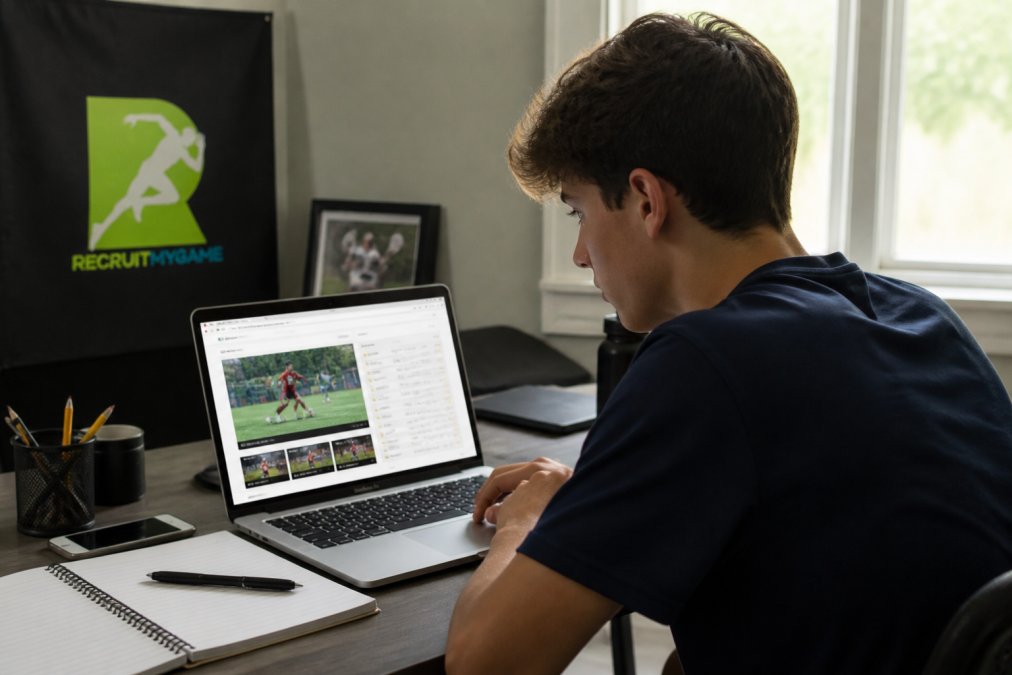
Your social media accounts matter more than you might think. College coaches regularly check social media to get a sense of who you are off the field. This doesn't mean you need to be perfect or overly polished, but it does mean being intentional about what you're posting. Share content that reinforces your athletic commitment, training sessions, game highlights, academic achievements, community involvement. Avoid posts that could hurt your recruiting chances, like controversial opinions, poor sportsmanship, or anything that suggests a lack of maturity.
Consider creating a simple personal website or using a platform that allows you to showcase your complete recruiting profile. This gives you control over how your information is presented and creates a professional touchpoint that coaches can reference. Include your highlight reel, your statistics, your academic information, and a brief bio that explains who you are and what you're looking for in a college program. The goal is to make it as easy as possible for coaches to understand your value. Treating your athletic journey with the same level of professional personal branding applied to emerging ventures ensures that your digital presence remains both authoritative and memorable as you navigate the competitive landscape of collegiate recruitment.
Building Your Personal Brand as a Student-Athlete
Your personal brand as a student-athlete goes beyond your athletic performance. It's about how you present yourself, the values you demonstrate, and the impression you leave with everyone you interact with. Coaches want to recruit complete athletes, players who are skilled, but also mature, coachable, and committed to excellence both on and off the field.
Start by identifying what makes you unique. Are you known for your work ethic? Your leadership? Your ability to play multiple positions? Your academic performance? Your community involvement? Whatever sets you apart, lean into it. Your personal brand should reflect your genuine strengths and values, not a manufactured image of who you think coaches want you to be. Authenticity resonates far more than trying to be someone you're not.
Document your journey intentionally. Share content that shows your training process, your growth as an athlete, and your commitment to your goals. This doesn't mean posting constantly or creating polished content, it means being consistent and genuine. Show the work that goes into becoming a better athlete. Coaches understand that recruiting is competitive, and they respect athletes who are willing to put in the effort to improve.
Build relationships with coaches and mentors who can speak to your character and work ethic. These relationships become especially valuable when coaches are evaluating you. A recommendation from a respected coach or mentor carries weight in the recruiting process. Don't wait until you're actively recruiting to start building these relationships. Start now by being a good teammate, a hard worker, and someone who takes feedback seriously.
Athlete Recruiting Profile Examples That Get Results
When you're building your recruiting profile, it helps to understand what works. Effective recruiting profiles share some common characteristics. They're organized, they're complete, and they tell a clear story about who you are as an athlete.
A strong recruiting profile includes your athletic statistics organized by season. Coaches want to see your performance over time, not just your best numbers. Include your position, your height and weight, your speed and agility metrics if available, and any other relevant athletic data. Be honest about your statistics, coaches can verify this information, and misrepresenting yourself will hurt your credibility.
Your academic information matters more than many athletes realize. Include your GPA, your test scores, and any academic achievements or honors. Coaches are recruiting student-athletes, which means academics are a legitimate part of the evaluation. If you're a strong student, this is a recruiting advantage. If you're still working on your grades, showing that you're committed to academic improvement can still be impressive to coaches.
Your highlight reel should be concise and focused. Rather than uploading every minute of every game you've played, curate your best plays and organize them by category, offensive highlights, defensive highlights, game footage, training footage. This makes it easier for coaches to see what you can do without having to sift through hours of footage.
Include a brief personal statement or bio that explains your story. Why do you want to play college athletics? What are your goals?
How to Create a Highlight Reel for Recruiting Success
Your highlight reel is one of the most important components of your recruiting profile. This is where coaches get to see you play, and it needs to be organized and easy to review. A well-constructed highlight reel can make the difference between a coach watching your entire clip and a coach moving on after thirty seconds.
Using Recruiting Profile Templates to Organize Your Information
A recruiting profile template can help you organize your information in a way that's clear and easy for coaches to review. Templates provide structure and ensure you're not missing any important information. They also make it easier to update your profile as your season progresses and your statistics change.
Measuring ROI and Tracking Your Recruiting Progress
Understanding whether your recruiting efforts are actually working requires tracking specific metrics. You need to know how many coaches are viewing your profile, how many are watching your highlight reel, and how many are actually reaching out to you. This data helps you understand what's working and what needs to be improved.
Frequently Asked Questions
What essential information must be included in a student athlete profile?
Your profile should include your athletic stats, academic performance, game footage or highlight reels, position and jersey number, height and weight, graduation year, contact information, and links to your social media presence. Many college coaches also look for your GPA and standardized test scores, as academic eligibility matters just as much as athletic ability. Include details about your training regimen, any awards or recognitions you've earned, and information about your work ethic and character. The more complete and organized your profile, the easier you make it for coaches to evaluate whether you're a fit for their program.
When should a student athlete begin building their digital recruiting presence?
Starting in freshman or sophomore year gives you the most runway to build a strong digital footprint before coaches begin serious recruiting in junior and senior years. Many college programs begin evaluating prospects as early as sophomore year, especially for popular positions. The earlier you start, the more game footage and content you'll have accumulated, and the more time you have to refine your personal brand and demonstrate consistency. That said, it's never too late to start, even if you're already a junior, beginning now is far better than waiting until senior year when coaches may have already filled their rosters.
How can student athletes use social media to improve their recruiting visibility?
Post consistently about your athletic achievements, training sessions, game highlights, and academic accomplishments to build authentic engagement with your audience and coaches. Use relevant hashtags related to your sport and position, tag your school and coaching staff when appropriate, and engage genuinely with content from college programs you're interested in. Show your personality and maturity through your posts, coaches evaluate not just your athletic ability but also your character and professionalism. Avoid controversial content, maintain a professional tone, and consider creating a dedicated account or section focused specifically on your athletic brand separate from personal content if needed.
How do AI-powered recruiting platforms help athletes get noticed by college coaches?
AI-powered platforms analyze roster data, graduation timelines, and coaching staff stability to identify college programs that actually have a need for your specific position, rather than sending your profile to teams that are already full. These platforms provide verified coach reviews and performance analytics that show you exactly how many times coaches have viewed your profile and engaged with your content. This data-driven approach means you're reaching the right coaches at the right programs instead of casting a wide net with generic recruiting lists. The platforms also provide tools like QR business cards and professional web addresses that make it easy for coaches to access and share your recruiting profile.