 how-to
Do QR Business Cards Help Athletes Land Scholarships?
Table of Contents
- Why QR Business Cards Matter for Athletes
- How to Stand Out to College Coaches with Digital Tools
- QR Codes vs. NFC Technology for Athletic Networking
- How to Share Highlight Reels with Coaches Effectively
- Building Recruiting Profile Templates for Athletes
- Tracking Scan Analytics and Measuring Your QR Card ROI
- Common Mistakes Athletes Make with Digital Business Cards
- Conclusion
- Frequently Asked Questions
Last Updated: September 21, 2026
Why QR Business Cards Matter for Athletes
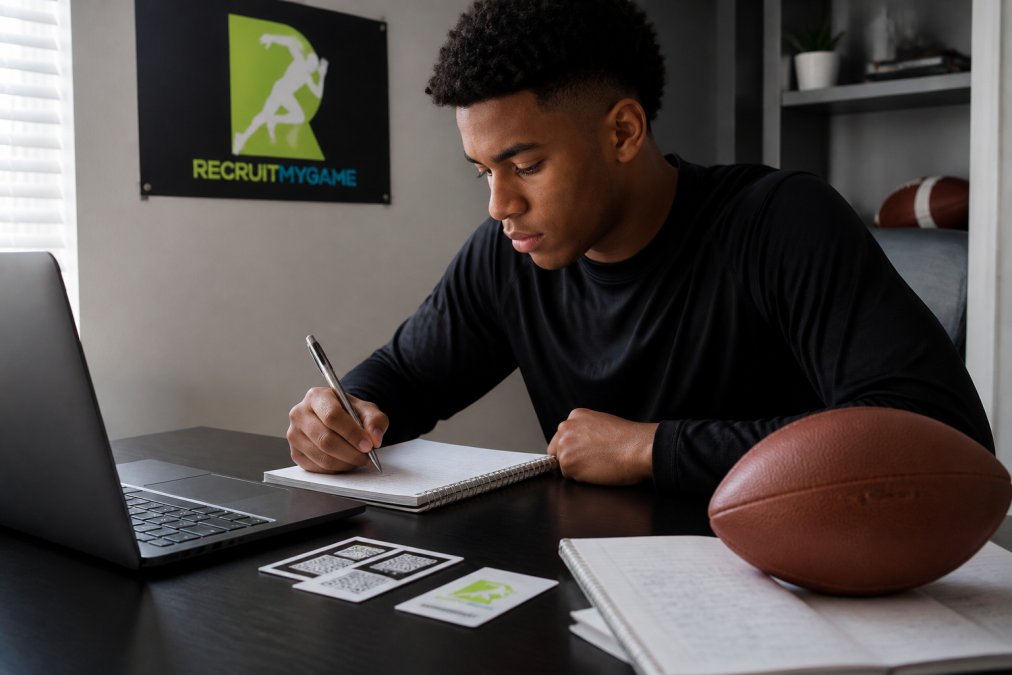
Do QR business cards help athletes land scholarships? They're a strategic tool worth using if you approach them the right way, a bridge between your physical presence at recruiting events and your digital recruiting profile that gives college coaches instant access to your highlight reels, stats, and contact information without fumbling through business cards or trying to remember your name later.
The athletes who land scholarships aren't necessarily the ones with the flashiest marketing materials, they're the ones who make it ridiculously easy for coaches to learn more about them. A QR code on a business card eliminates friction by letting coaches watch your highlight reel, see your recruiting profile, and understand your athletic trajectory in seconds. Since coaches are evaluating dozens of athletes at every showcase and camp, the ones who make a memorable impression and then provide instant access to more information tend to get more follow-up communication.
The real question isn't whether QR business cards help athletes, it's whether you're using them as part of a larger strategy that positions you as a serious recruit. A QR code pointing to a poorly organized landing page won't help you. A QR code that connects coaches to your best film, your academic standing, and your recruiting preferences? That changes the conversation.
How to Stand Out to College Coaches with Digital Tools
Standing out to college coaches requires thinking like a coach first, they're looking for athletes who fit their roster needs, are academically eligible, and are serious about playing at their level. Digital tools like QR business cards help you communicate all of that information quickly and professionally.
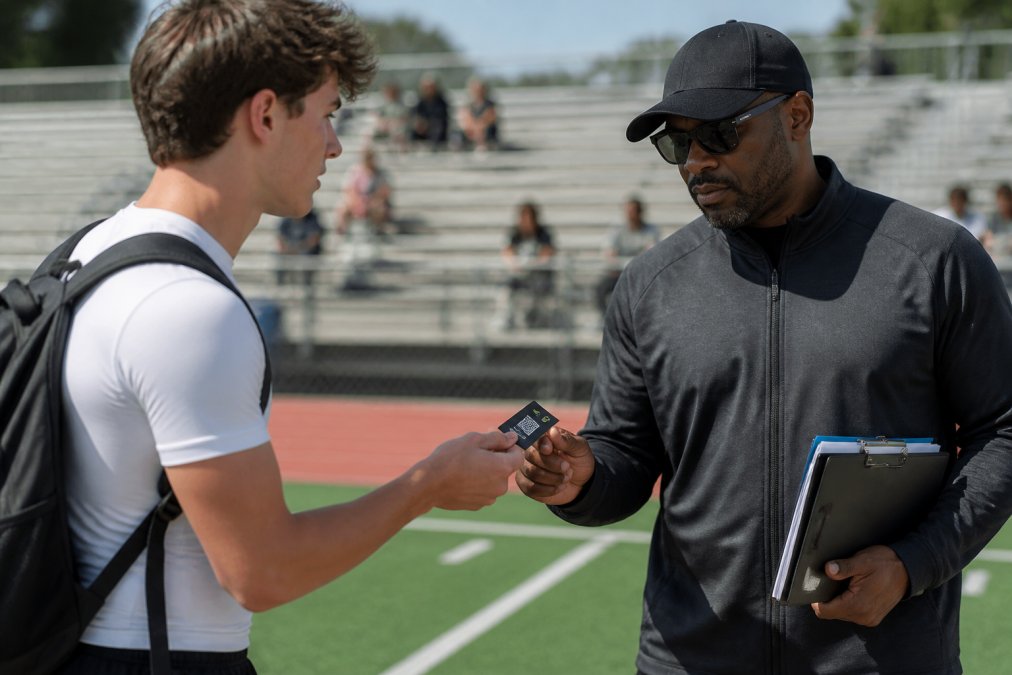
Point coaches toward a landing page that includes your highlight reel front and center, your key stats (height, weight, position, GPA, test scores), and a clear call to action for contact or scheduling. Many athletes miss the mark by creating cluttered, outdated, or mobile-unfriendly pages, but since coaches are scanning on their phones, everything needs to load fast and look clean on a small screen.
Here's what your digital presence needs to communicate to coaches:
- Your best athletic footage, edited and organized by position and skill
- Your academic credentials clearly displayed
- Your contact information and availability for calls or visits
- Links to your social media profiles if they're professional and relevant
- Your recruiting preferences, including position, conference, and academic priorities
Coaches receive hundreds of inquiries every recruiting cycle, so the athletes who stand out are the ones who make it easy to learn more. When a coach scans your QR code and lands on an organized, professional, mobile-friendly page, you're already ahead of most of the competition.
QR Codes vs. NFC Technology for Athletic Networking
When considering digital business cards for athletes, you'll likely hear about both QR codes and NFC (near-field communication) technology, and understanding the difference matters because each has distinct advantages for recruiting.
A QR code is a two-dimensional barcode that coaches scan using their smartphone camera, simple, universal, and requiring no special app or technology beyond what every phone already has. When a coach scans your code, they're directed to your recruiting landing page or profile.
NFC technology uses a small chip embedded in a physical card that automatically shares your contact information when a coach taps their phone against it. While it feels more futuristic, not all phones support NFC equally, and many coaches still aren't familiar with how it works.
For athletic recruiting, QR codes have a significant advantage, they're universally recognized, work on every smartphone, and don't require coaches to understand the technology. A coach sees a QR code and knows exactly what to do, whereas NFC asks coaches to do something less intuitive, and in recruiting, you want to remove barriers, not add them.
How to Share Highlight Reels with Coaches Effectively
Your highlight reel is arguably the most important piece of your recruiting profile, and coaches want to see your best plays in context, which plays are against competitive opponents, which demonstrate your ability to execute under pressure, and which show your understanding of the game beyond just athleticism.
When you link your highlight reel through your QR code, make sure it's edited for a coach's perspective, not a fan's perspective. A coach-focused reel shows your best plays in context, you making the right read, executing the right technique, and doing it consistently against quality competition, because coaches are evaluating your football IQ, work ethic, and coachability as much as your raw athleticism.
Here's how to structure your highlight reel for maximum impact:
- Keep it between two and three minutes long, long enough to demonstrate your skill set, short enough to respect a coach's time
- Lead with your best plays, not your most recent ones
- Include plays from multiple games to show consistency
- Label your plays with opponent names and dates so coaches understand the level of competition
- Show both your successes and your recovery from mistakes, coaches want to see how you respond to adversity
- Include full-speed game footage, not just slow-motion highlights
The reason coaches care about all of this is that they're trying to project whether you'll perform at their level. A highlight reel that shows you dominating weaker competition doesn't tell them much. A highlight reel that shows you competing effectively against strong opponents tells them everything they need to know about whether you belong in their program.
Building Recruiting Profile Templates for Athletes
Your recruiting profile is the hub of your digital presence, everything else, your QR code, highlight reel, and social media points back to it. Getting this right is essential because it's where coaches form their first detailed impression of you as a recruit.
A strong recruiting profile should include your basic information, name, position, height, weight, GPA, and test scores, and it needs to be accurate and current. Coaches cross-reference this data with their roster needs, so outdated information wastes their time and yours.
Include your athletic achievements and statistics with specific, honest data, "Averaged 15 points per game against conference opponents" means more than "scored a lot of points." Coaches want concrete data they can evaluate against other recruits.
Include your academic standing and test scores if they're competitive, academic eligibility is a hard requirement, and strong academics differentiate you from other athletes with similar athletic profiles.
Include a section about your recruiting preferences and goals, what kind of program you're looking for, what academic majors interest you, and your timeline for deciding. This helps coaches understand whether you're a realistic fit for their program.
Tracking Scan Analytics and Measuring Your QR Card ROI
One of the most underrated aspects of using QR codes for recruiting is tracking the data. When you create your QR code through a platform like RecruitMyGame, you gain access to analytics that tell you how many coaches are scanning your code, when they're scanning it, and what they're doing after they land on your profile.
Common Mistakes Athletes Make with Digital Business Cards
Most athletes who use QR codes on their business cards make one of a few predictable mistakes that undermine the entire strategy. Understanding these pitfalls will help you avoid them and maximize your chances of standing out to coaches.
Conclusion
Do QR business cards help athletes land scholarships? They're a valuable tool in your recruiting toolkit, but they're not a magic solution. They work best when they're part of a larger strategy that includes a strong recruiting profile, quality highlight film, consistent follow-up, and genuine fit with the programs you're targeting. The real power of a QR code is that it removes friction from the recruiting process.
Frequently Asked Questions
Are QR business cards more effective than traditional paper cards for athletes?
QR business cards give coaches instant access to your highlight reel, stats, and contact information without typing anything in, which saves time and increases the chance they'll actually watch your film. Traditional paper cards require coaches to manually search for you or type in a website, which creates friction. The contactless sharing approach also feels more professional and modern, especially for athletes competing at higher levels. However, the real advantage comes from what's behind the QR code, a well-optimized landing page with your best highlights and clear call to action converts more interest into actual coach engagement.
What information should an athlete include on a digital business card behind a QR code?
Your digital landing page should include your highlight reel (30-90 seconds of your best plays), key stats relevant to your position, your athletic achievements and awards, contact information for you and your parents, links to your social media or verified recruiting profile, and a clear call to action like 'Contact me about recruiting' or 'Schedule a film review.' Don't overwhelm coaches with too much information, they want to see film first, stats second, and contact details last. A recruiting profile template that's organized by sport and position helps coaches find what matters most to them quickly.
Can QR codes on business cards really help me get recruited, or is it just a gimmick?
QR codes themselves aren't magic, but they solve a real problem coaches face: accessing your film takes fewer steps. When a coach meets you at a showcase or camp, scanning your QR code immediately shows them your best plays instead of asking them to remember your name and search for you later. The conversion happens because you're removing barriers between the coach's interest and seeing your film. What matters most is what's behind the code, your highlight reel quality, your stats, and how you present yourself. Used as part of a complete recruiting strategy that includes AI-powered roster matching and verified coach outreach, QR cards become a powerful tool rather than just a novelty.
How do I track whether coaches are actually scanning my QR code?
Dynamic QR codes (different from static ones) track how many times they've been scanned, when they were scanned, and from which devices. This scan analytics data helps you understand coach interest and engagement with your profile. If your QR code gets scanned dozens of times but you're not hearing from programs, that tells you the issue is your landing page or film quality, not your networking. Some recruiting platforms include built-in analytics for QR codes and digital business cards, so you can see exactly how many coaches accessed your highlight reel and how long they watched.