 How-to
5 Best Ways to Organize Your College Athletic Recruiting Journey
Last Updated: November 14, 2026
Quick Summary
The best way to organize your college athletic recruiting journey is to build a ranked target list split into reach, match, and safety tiers, then track everything in a multi-tab spreadsheet. Log every coach contact, outreach message, follow-up, document, and deadline, and update the sheet the same day you send a message or finish a call.
- Sort target schools into reach, match, and safety tiers and check each roster for real position needs.
- Map the recruiting timeline by grade, from building your profile as a freshman to signing as a senior.
- Build a recruiting spreadsheet with separate tabs for schools, contacts, outreach, follow-ups, documents, deadlines, and visits.
- Send one follow-up every two to three weeks, and only when you have something real to share.
- Review your follow-ups tab every Sunday and set the week's outreach tasks from it.
Table of Contents
- Build a College Recruiting Target List That Matches Your Level
- Map the College Recruiting Process Timeline by Grade
- Set Up a College Recruiting Spreadsheet Template for Every Coach Conversation
- Learn How to Contact College Coaches for Recruiting and Follow Up
- Frequently Asked Questions
Build a College Recruiting Target List That Matches Your Level
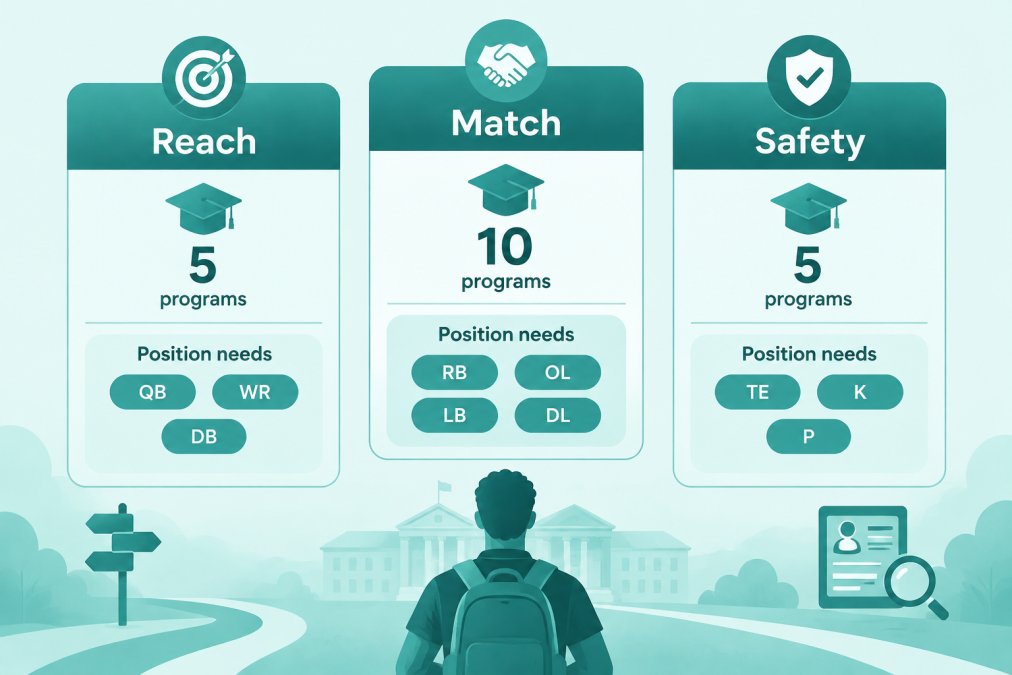
The best ways to organize your college athletic recruiting journey start with one honest list. A college athletic recruiting target list is a ranked set of programs that fit your academics, your position, and your current level of play. Families often waste months on schools that will never reply. Sort targets into reach, match, and safety tiers, then check each roster for real position needs before you add a name.
- Reach: strong programs where you would need a breakout season
- Match: your grades and film fit the current roster
- Safety: you would likely be admitted and compete for a spot
Map the College Recruiting Process Timeline by Grade
A college recruiting process timeline turns a vague dream into dated tasks. Freshman year: build your profile and start filming. Sophomore year: begin coach outreach and attend camps. Junior year: schedule visits and handle offers. Senior year: decide and sign. Write each milestone on a calendar with a deadline, because coaches evaluate prospects on their own schedule, not yours.
For a fuller grade-by-grade breakdown, read When Should You Start Recruiting? The Grade-by-Grade Timeline Coaches Actually Use.
Set Up a College Recruiting Spreadsheet Template for Every Coach Conversation
A college recruiting spreadsheet template keeps every coach conversation, document, and deadline in one place. The mistake most families make is building a single flat list of schools. A working recruiting tracker has separate tabs that each answer a different question, so you never have to hunt for a transcript, a film link, or the date you last heard from an assistant coach.
Build the workbook with these tabs:
- Schools. One row per program: school name, division, conference, position coach, admissions contact, academic fit notes, roster needs, and your tier (reach, match, or safety).
- Contacts. One row per coach or staff member: name, title, email, phone, preferred contact method, and the date of your last interaction.
- Outreach log. One row per message: date sent, channel (email, phone, direct message, questionnaire), subject line, what you asked, and the response.
- Follow-ups. A filtered view of the outreach log showing every thread with no reply and the next date you plan to check in.
- Documents. Links to your transcript, test scores, athletic resume, and film, plus the date each was last updated.
- Deadlines. Application dates, test registration dates, camp registration cutoffs, official visit windows, and financial aid deadlines.
- Visits and camps. Date, location, coaches you met, impressions, and the one follow-up you owe afterward.
| Tab | What to Log | Update Frequency |
|---|---|---|
| Schools | Program name, division, tier, roster needs | Once, then after each new roster update |
| Contacts | Coach name, title, email, phone | Once per new contact |
| Outreach log | Date, channel, subject, ask, response | Every message |
| Follow-ups | Threads awaiting reply, next check-in date | Weekly |
| Documents | Transcript, test scores, resume, film links | After any update |
| Deadlines | Applications, tests, camps, visits, aid forms | Weekly review |
| Visits and camps | Date, coaches met, notes, owed follow-up | Same day |
Two habits keep the sheet useful. Update it the same day you send a message or finish a call, while the details are fresh. Then review the follow-ups tab every Sunday and set the week's outreach tasks from it. A stale sheet is worse than no sheet because it gives you false confidence.
Watch out: storing film links as attachments rather than shareable links will break when a coach opens the file on a phone. Keep one master link per video and paste it into every message.
If you want a coach-first system instead of a manual sheet, see every recruiting tool in one coach-first system.
Learn How to Contact College Coaches for Recruiting and Follow Up
Learning how to contact college coaches for recruiting comes down to short, specific messages, a consistent follow-up rhythm, and a written record of every exchange. Coaches recruit athletes they can evaluate quickly and trust to be reliable.
A first outreach email should fit on one screen and answer four questions: who you are, what you play, whether you are academically eligible, and where the coach can watch you.
- Subject line: Graduation year, position, and name, for example, "2028 midfielder, [Your Name], film inside."
- Opening line: One sentence on why this program specifically, referencing a game, a system, or a roster need you noticed.
- Body: Graduation year, position, height and weight if relevant to your sport, current GPA, test score if you have one, and your club or high school team.
- Film link: One link to a short highlight clip, plus a full-game link if the coach asks.
- Close: A clear ask, a camp recommendation, a visit, or simply confirmation that they are recruiting your position in your class.
Follow-up timing matters more than most families realize.
Keep a contact log that mirrors your outreach log. For each thread, record the date of your last message, the channel, whether you got a reply, and the next planned touch.
Watch out: contacting a coach during a dead period or outside the permitted contact window can hurt you more than silence.
Two guides help here: Level Up Your Coach Contact Game walks through the full outreach process, and The Coach Outreach Formula gives you message templates that get replies.
Organizing a recruiting journey is hard when notes live in five places and nobody owns the follow-up. Recruit My Game gives athletes one place to match with programs by real roster needs, track coach conversations, and share film with context. Build a free profile, then upgrade to Super Charged Pro when you want deeper analytics on visits and video plays. Get started with Recruit My Game and turn scattered notes into a recruiting plan you can actually follow.
Frequently Asked Questions
How do you organize the college athletic recruiting process?
Start with one shared system the athlete and parents both use. Build a target list sorted by division level and academic fit, then track every coach email, phone call, and follow-up in a single spreadsheet or recruiting platform. Add a recruiting timeline with grade-based deadlines, keep transcripts and highlight video links in one folder, and review the whole file weekly so nothing stalls.
What should be included in a college recruiting spreadsheet?
Include the college name, division level, coach name and contact details, date of first outreach, last follow-up, questionnaire status, transcript sent, film sent, camp or showcase dates, and notes from each conversation. Add columns for academic fit such as test scores and intended major, plus a status field for roster spot interest. Update the sheet after every coach contact so follow-ups never slip.
When should student-athletes start contacting college coaches?
Outreach can begin earlier than most families expect, but the rules differ by sport and division, so check the current NCAA recruiting calendar for your sport before sending anything. As a practical habit, build your profile and film in freshman year, then start proactive outreach once you have a highlight video and a realistic target list. Waiting until senior year leaves little time for coach evaluation or a campus visit.