 comparison
Is There a Better Pathwise Sports Alternative for Athletes?
Quick Summary
The best Pathwise Sports alternative depends on your athlete's situation, so compare platforms on match logic, profile control, coach review verification, free trial scope, and sport coverage. Recruit My Game is one option that uses roster-need matching; it offers a free athlete profile, with optional paid plans and trials for advanced recruiting features, so confirm current plan details and check that it covers your sport before committing.
- Compare platforms by how they match schools, not just by brand name.
- Check who owns and can edit the athlete profile, and how fast updates happen.
- Confirm whether coach reviews are verified or open to anyone to post.
- Find out exactly what the free trial includes and when billing starts.
- Make sure the platform has current data for your specific sport.
Table of Contents
- Is There a Better Pathwise Sports Alternative for Athletes?
- Why Athletes and Parents Look for a Pathwise Sports Alternative
- How the Main Recruiting Platforms Compare on Cost and Features
- Best Recruiting Apps for Athletes: Matching Tools to Your Athlete's Situation
- Choosing Your Next Step: Profile, Outreach, and Coach Emails
- Frequently Asked Questions
Is There a Better Pathwise Sports Alternative for Athletes?
Last Updated: November 7, 2026
Why Athletes and Parents Look for a Pathwise Sports Alternative
Parents and athletes start looking for a different option for a few predictable reasons. Cost is usually the first one. Recruiting services can feel expensive, and it's hard to know what you're getting until you've already paid. Control is the second. Many families want to see their athlete's profile, update it themselves, and decide who gets it.
A recruiting pathway that works for one athlete can be a poor fit for another. A walk-on in a crowded sport needs different tools than a player with a clear roster gap at their position. That's why the search for a Pathwise Sports alternative is really a search for the right fit, not just a cheaper name.
The good news is that the choice is wider than it looks. You can compare platforms on price, features, and how much of the work you still have to do yourself.
How the Main Recruiting Platforms Compare on Cost and Features
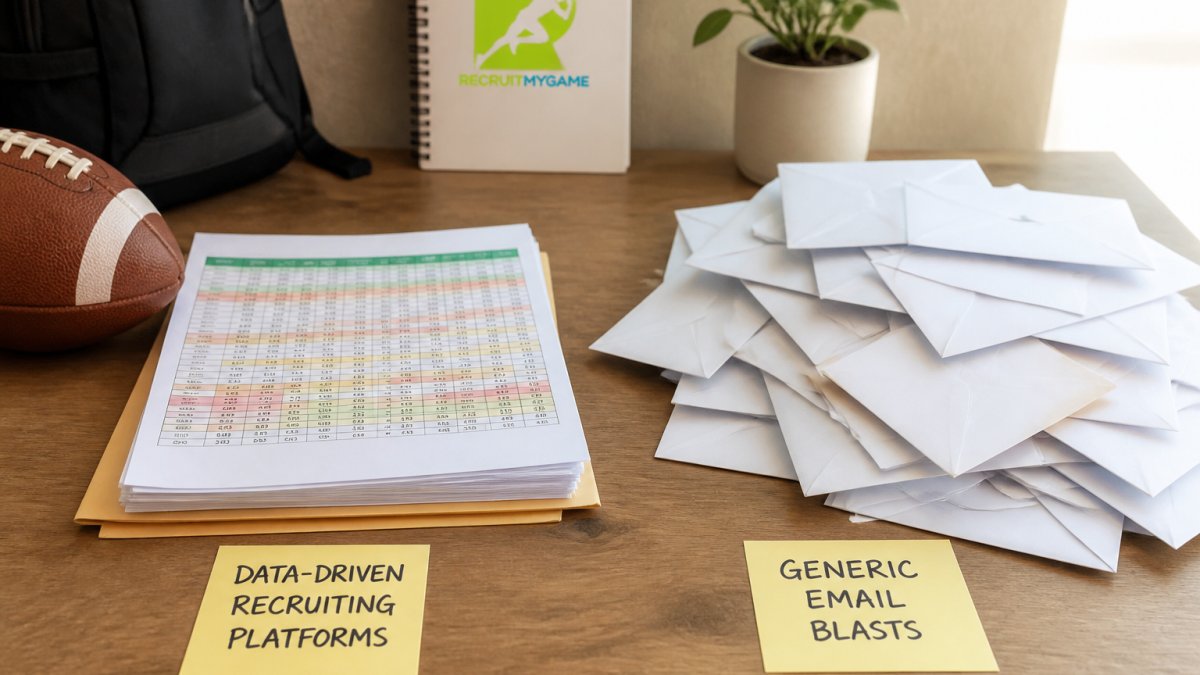
Most families comparing a Pathwise Sports alternative get stuck at the same place, because the marketing pages all sound the same and none of them tell you what you actually get for free versus which features become available once you pay. The honest way to compare is to stop looking at brand names for a minute and look at the four things that actually change your experience: how the platform decides which schools to show you, who owns and can edit the profile, whether coach contact is verified or open, and where the free tier ends.
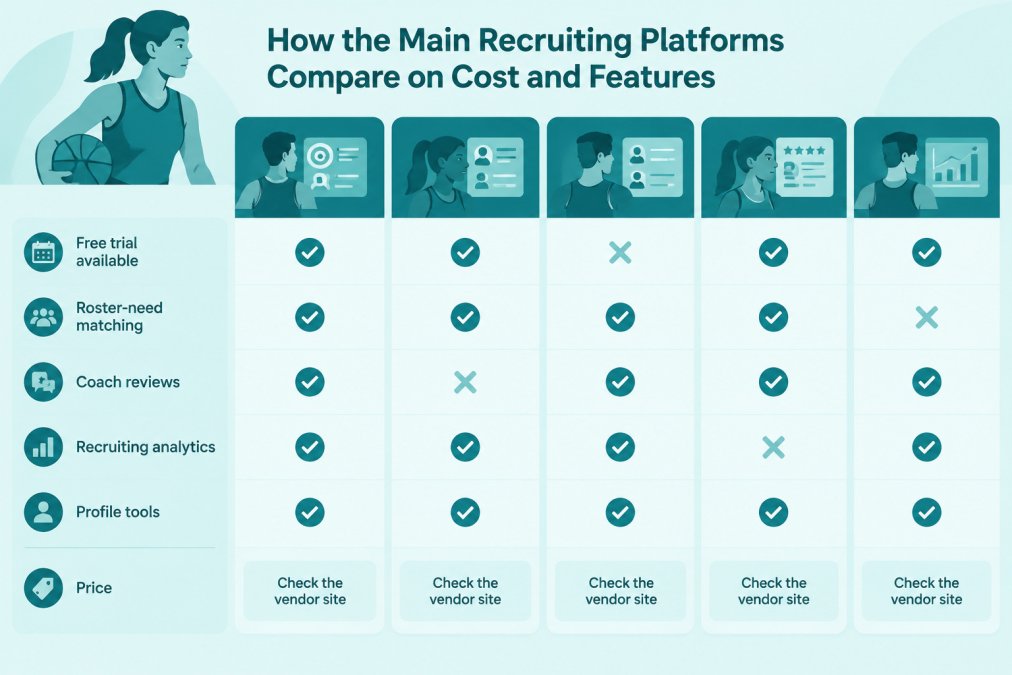
RecruitMyGame is an AI-powered college recruiting platform that looks at roster data, graduation timelines, and coaching staff stability to flag programs that may have a real need at your athlete's position. It also includes verified coach reviews, recruiting analytics, and QR business cards, and it offers a free trial so you can test the matching before committing. Check the RecruitMyGame website for current plan details and confirm what the trial includes.
Compare plans and features on RecruitMyGame
If you're coming from a service where a rep drives the process, the thing to look for is how much control you keep once you switch. Own your recruiting profile without waiting on reps walks through that model. Athletes who already live in Hudl for film may want a setup that keeps that film and adds college matching on top, and Turn existing film into a recruiting tool covers that approach.
Watch out: a free trial that only lets you browse schools can feel productive for a month and leave your athlete with nothing sent, so confirm before you start what the trial includes.
One more comparison point that gets skipped is how the AI or matching engine actually works, because that determines whether the recommendations are worth trusting. Most tools of this type take your position, graduation year, measurable stats, academics, and sometimes film, then score them against roster gaps and depth charts, but roster data goes stale fast when coaches leave or players transfer, so treat any recommendation as a starting list to verify yourself rather than a verdict and cross-check the school's current roster page before you invest time in outreach.
Here is a quick side-by-side of the four things that change your experience most, using only what the article covers.
| Comparison point | What to check | Why it matters |
|---|---|---|
| Match logic | Does it filter by roster need and position? | Shows real openings, not just a list of schools |
| Profile control | Who owns and edits the profile? | Lets you update film and stats quickly |
| Coach reviews | Are reviews verified or open to anyone? | Tells you how trustworthy the feedback is |
| Free trial scope | What the trial includes and when billing starts | Avoids paying before you see results |
| Sport coverage | Current data for your specific sport | Thin sport data makes matches unreliable |
Best Recruiting Apps for Athletes: Matching Tools to Your Athlete's Situation
The right app depends less on which brand is trending and more on two things families rarely put on the same page: where your athlete actually sits in the recruiting timeline, and which governing body's eligibility rules apply to them, and those two facts change what the tool needs to do.
Start with the pathway, because it sets the rules the app has to help you satisfy. NCAA eligibility requirements include approved core courses, minimum core-course GPA standards, and certification through the NCAA Eligibility Center. Individual colleges may have additional admission requirements.
Then match the tool to the situation. A high school junior with strong film and a short list of target schools needs roster-need filtering and direct coach contact, because the goal is precision. A senior still looking for an open spot needs breadth, meaning a tool that surfaces programs with late roster turnover and doesn't hide smaller schools behind a paywall. An athlete who mainly needs film organized and shareable needs video hosting and analytics more than a coach database.
Sport matters more than most families expect, and this is where a lot of app comparisons fall flat. Recruiting timelines differ by sport, scholarship availability differs by sport and division, and the number of roster spots per program varies enough that a tool tuned for football or basketball may not translate to track, swimming, soccer, or lacrosse.
See how the matching works for your sport and position
A useful exercise is to build a one-page comparison for your athlete's situation and score each app against it. List the pathway you're targeting, the division level that fits the athlete's current ability, the sport, the graduation year, and the budget, then ask whether the app filters on those and whether the free tier lets you test the matching before you pay. That single page will tell you more than any ranking list, because it forces the comparison onto your athlete's actual facts instead of a generic best-of.
Watch out: an app that pushes every athlete toward the highest division it can name is doing you a disservice, since a realistic fit at a level where your athlete can actually get on the field beats a reach school where they ride the bench, and the best tools let you filter by competition level rather than just prestige.
Choosing Your Next Step: Profile, Outreach, and Coach Emails
Once you've picked a platform, focus on the basics: a coach-readable profile should show your athlete's position, measurable stats, academic standing, and a few game clips, kept short and current.
When you reach out to coaches, keep the email specific. Mention the program, the position, and one reason you're a fit. Coaches get a lot of generic messages, so a clear, honest note stands out.
If you want a step-by-step approach, this recruiting playbook for athletes and families walks through building a profile and reaching out with research behind you.
Start with one or two platforms, track your responses for a month, and adjust from there. Choosing a Pathwise Sports alternative doesn't have to be a big leap. It just has to fit your athlete's situation and your budget.
Ready to see which programs have a real need at your athlete's position? Get started with Recruit My Game for free and build a profile coaches can actually evaluate.
Frequently Asked Questions
Is Recruit My Game a good Pathwise Sports alternative for student-athletes?
It can be, depending on what your athlete needs most. Recruit My Game focuses on matching athletes to programs that have a real need at their position, using roster data, graduation timelines and coaching staff stability. It also includes verified coach reviews, recruiting analytics and profile tools like QR business cards. Recruit My Game offers a free athlete profile, with optional paid plans and trials for advanced recruiting features. Compare the feature set against your athlete's goals and check current pricing directly on the Recruit My Game website.
What should I look for in a recruiting platform for athletes?
Start with how the platform finds schools. Some tools only generate generic lists, while others check roster needs by position. Look at whether coach information is verified and how often it is updated. Check whether the platform covers your athlete's sport and position, and whether it offers tools for film, academics and coach communication in one place. A free trial lets you see how well these features work before you pay for anything.
Can a recruiting platform replace direct outreach to college coaches?
Not entirely. A platform can help you find programs that need your athlete's position and give coaches a clean profile to review. But coaches still respond best to a personal email from the athlete, with a short highlight reel and honest academic information. Use the platform to build the list and the profile, then do the direct outreach yourself.