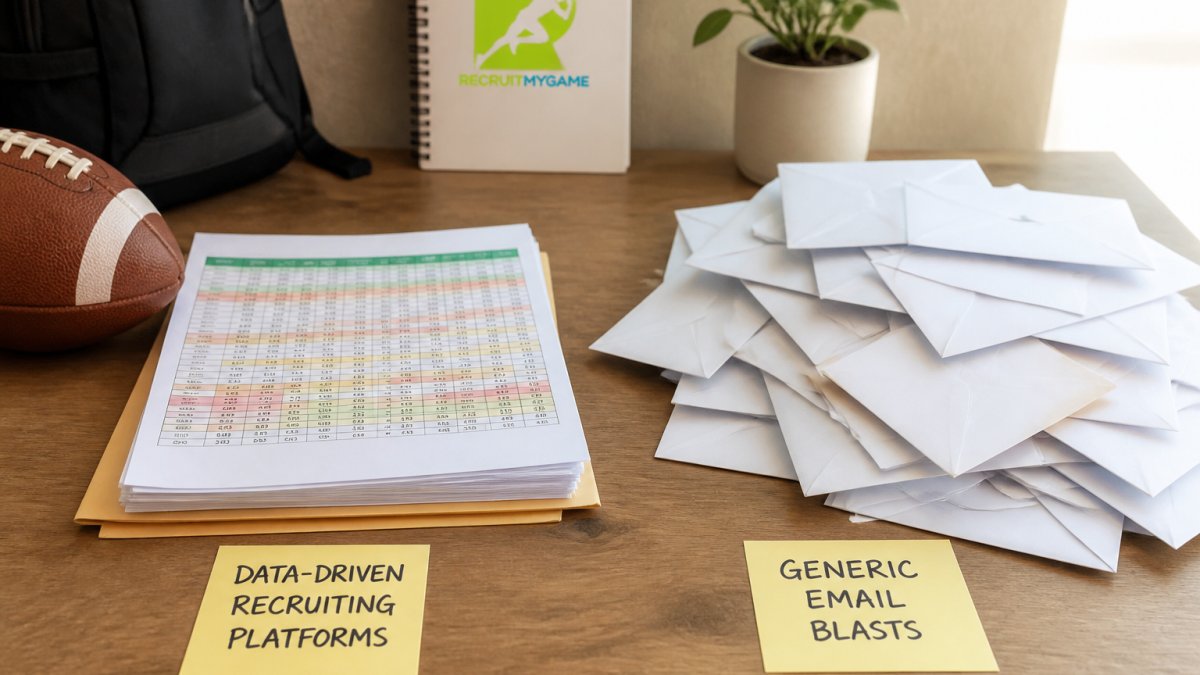
 comparison
Data-Driven Recruiting vs Generic Emails: Which Platforms Find Roster Needs?
Last Updated: October 26, 2026
Quick Summary
The college recruiting platforms that actually use data to find roster needs are the ones that analyze current rosters, graduation timelines, transfer activity, and coaching staff stability to identify programs with a real opening at your position. RecruitMyGame builds its AI matching engine around those four signals, while most other platforms still sell contact lists and automated emails.
- A credible roster-needs claim should point to four pieces of evidence you can check yourself.
- Ask each platform how often its roster data refreshes and where that data comes from.
- Run one athlete profile through every platform and record how many programs it returns.
- Track coach replies and whether a reply references your film or roster observation.
- Treat every match as a lead to confirm directly with the coach before you rely on it.
Table of Contents
- Why Most College Recruiting Platforms Still Send Generic Emails
- Quick Comparison: Which Platforms Actually Use Roster Data
- How College Recruiting Roster Needs Data Actually Works
- The Best College Recruiting Platforms for Data-Driven Matching
- How to Contact College Coaches Without Wasting Their Time
- College Coach Email Templates That Get Replies
- Where Each Platform Wins: A Side-by-Side Test With One Athlete Profile
- Start Your Free Trial and Test the Roster Data Yourself
- Frequently Asked Questions
Why Most College Recruiting Platforms Still Send Generic Emails
Most college recruiting platforms still send generic emails because their databases were built to sell contact lists, not to track which programs have a real opening at your position next season. That distinction sounds small until you realize what it costs a family: months of outreach to coaching staffs that already have three players at your daughter's spot, and silence in return. At RecruitMyGame, we built our matching engine around roster gaps and coaching tenure precisely because we watched too many athletes waste their window on volume instead of fit. The NCAA's recruiting guidance for prospective student-athletes makes clear that coaches evaluate need and fit before anything else, yet the average platform still treats outreach like a numbers game. Below, we break down which platforms actually use roster data, which just automate emails, and how to tell the difference in about ten minutes of testing.
Quick Comparison: Which Platforms Actually Use Roster Data
RecruitMyGame analyzes roster data, graduation timelines, and coaching staff stability to identify programs with a need for an athlete's position.
| Platform | Roster-Needs Data | Coach Email Tools | Free Trial | Best For |
|---|---|---|---|---|
| RecruitMyGame | AI matching on roster gaps and coach tenure | Verified profiles, analytics, QR cards | Yes | Athletes who want position-level fit |
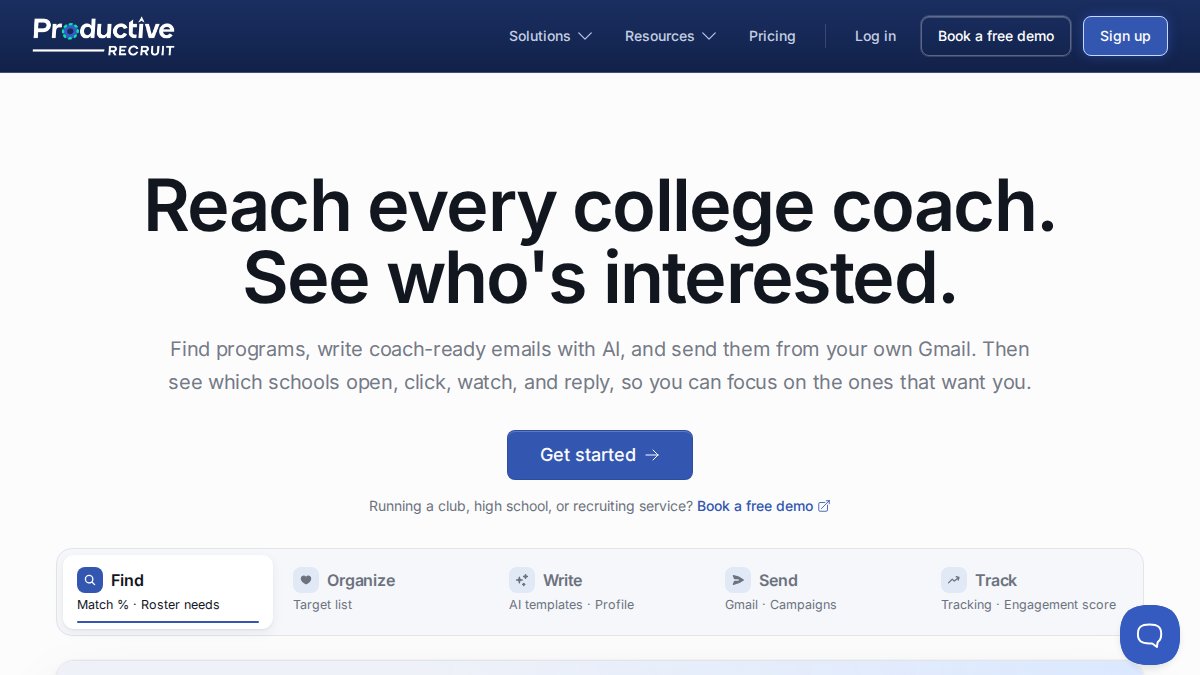
| ProductiveRecruit | Match percentages and roster needs | AI-written coach emails via Gmail | Not stated | Comparing program fit before contact |
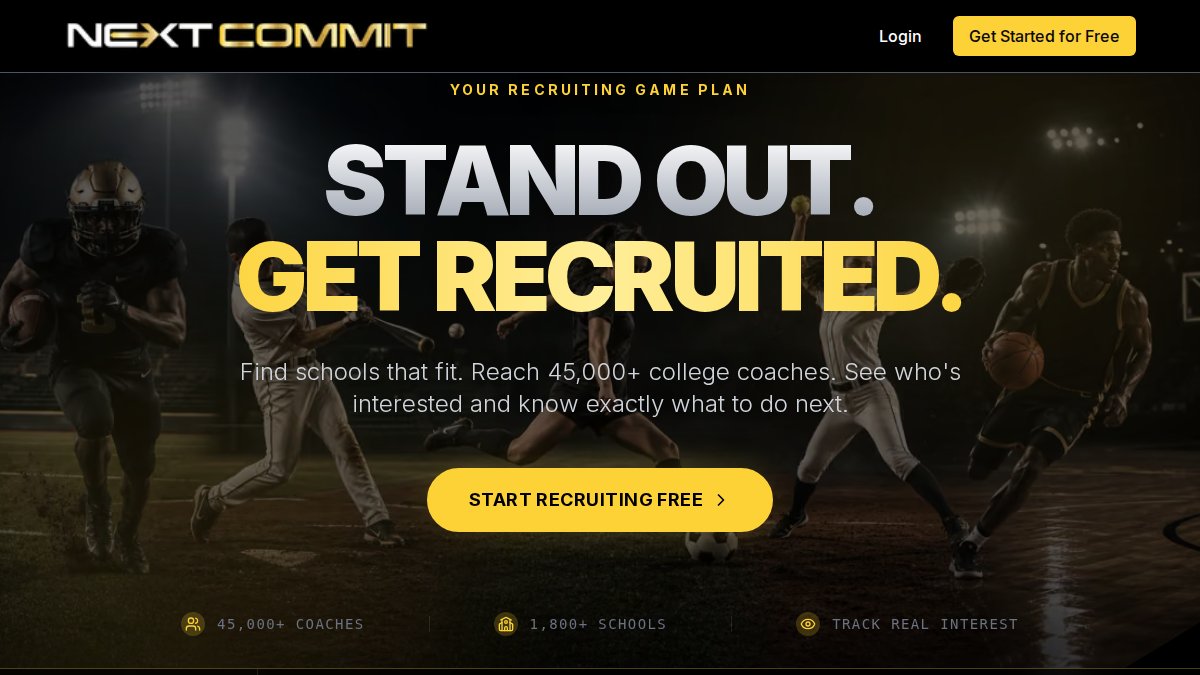
| NextCommit | Roster openings listed as a feature | Personalized emails on free plan | Yes | Low-cost personalized outreach |
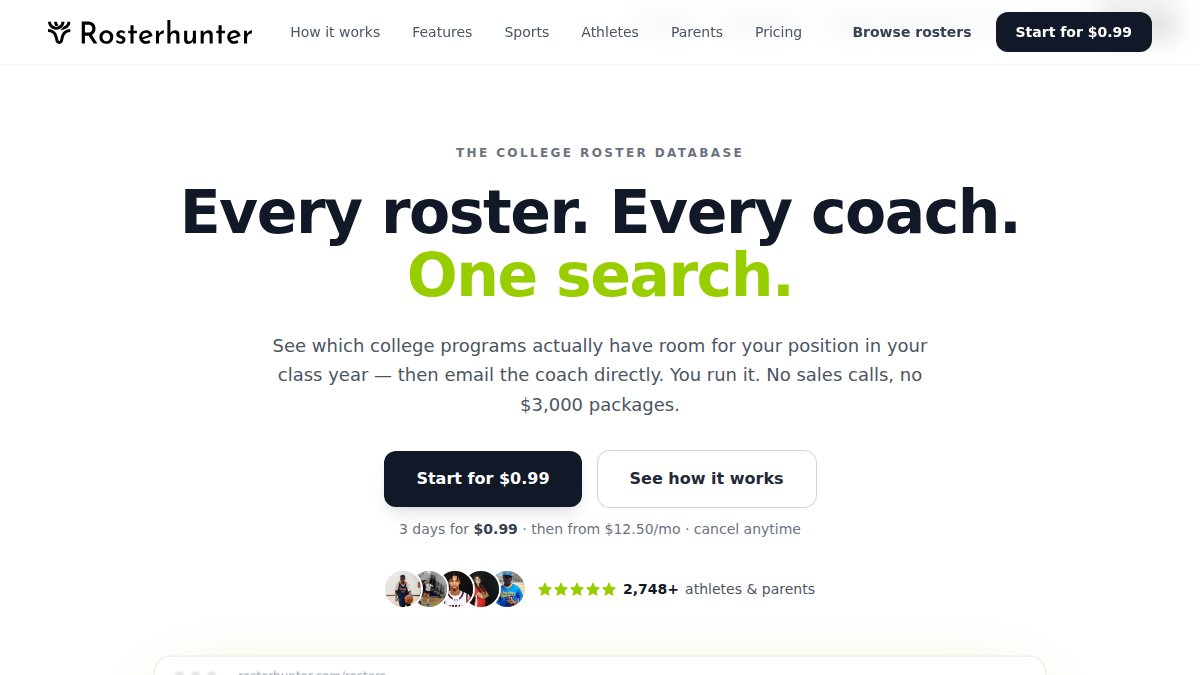
| Rosterhunter | Roster openings listed as a feature | Unlimited template-based emails | No | High-volume template outreach |
| SportsRecruits | Not verified in available research | Not verified in available research | No | Established-platform comparison |
Ask what evidence sits behind a platform's roster-needs claim.
What Evidence Should Back a Roster-Needs Claim
A credible roster-needs claim should point to four pieces of evidence you can check yourself: the current roster with positions and class years, the graduation timeline for players at your position, incoming commitments at that same position, and any coaching change that would reset the staff's recruiting priorities. If a platform cannot show you those four things for a specific program, its "roster needs" label is a guess dressed up as data, which is why we built the RecruitMyGame matching engine to surface those four signals together.
How to Verify Data Freshness in Ten Minutes
To assess roster information, pick one program you know well and check whether the platform's roster matches the program's own athletic website.
The NCAA transfer portal rules and documentation matter here too, because transfer activity reshuffles depth charts faster than most families realize, and a platform that does not track incoming and outgoing transfers is working from an incomplete picture. The U.S. Department of Education's College Scorecard is a useful cross-check for program and outcomes data, though it will not tell you who is graduating from the depth chart. Use it to confirm the program exists and fits academically, then use the platform's roster evidence to confirm the need.
How College Recruiting Roster Needs Data Actually Works
Roster needs data works by combining a program's current roster, its graduation timeline, transfer activity, and coaching staff stability into a picture of which positions will be thin when you would arrive on campus. A program with two senior starters at your position and no committed underclassmen behind them has a need. Once you understand that, the next question is how coaches actually search and evaluate athletes, which the Coach Portal: How coaches search and evaluate page explains. A program with three freshmen at your position does not, no matter how many recruiting questionnaires it sends out.
What Roster Data Should Tell You About a Program
Good roster data answers four questions: who is on the roster now, when they graduate, whether the staff that recruited them is still there, and how many incoming players are already committed at your spot. At RecruitMyGame, we fold coaching tenure into that picture because a new staff often means a new recruiting philosophy and a fresh set of needs. If a platform only shows you a list of schools with your sport, you are looking at a directory, not roster intelligence. The U.S. Department of Education's College Scorecard is a useful cross-check for program and outcomes data, though it will not tell you who is graduating from the depth chart.
The Data Freshness Problem Nobody Talks About
Data freshness is the difference between a platform and a guess, and almost no recruiting service will tell you how often its roster information updates. Rosters change every semester through graduation, transfers, and decommits, so a snapshot that is six months old can point you at a program that filled your position in December. Ask any platform this question directly: how often does roster data refresh, and where does it come from? If the answer is vague, treat the roster-needs claim as marketing. This is also where the NCAA transfer portal rules and documentation matter, because transfer activity reshuffles depth charts faster than most families realize.
The Best College Recruiting Platforms for Data-Driven Matching
A college recruiting platform can help athletes assess whether a program has a need at their position.
RecruitMyGame: AI Matching Built on Roster Gaps and Coach Tenure
The matching engine analyzes roster data, graduation timelines, and coaching staff stability to identify programs with a need for an athlete's position. RecruitMyGame offers a verified coach and teacher review system, recruiting analytics that track profile visits and video plays, a personalized web address, and QR business cards. Support covers 20+ sports. Best for: athletes who want position-level fit.
ProductiveRecruit, NextCommit, Rosterhunter, and SportsRecruits Compared
SportsRecruits appears consistently in comparisons of major recruiting platforms, but the available research does not substantiate roster-needs analysis or pricing, so verify directly before you buy. For a closer look at how RecruitMyGame's AI matching stacks up against NCSA, Hudl, FieldLevel, and SportsRecruits, see how we compare to NCSA, Hudl, FieldLevel, and SportsRecruits.
How to Contact College Coaches Without Wasting Their Time
Before contacting a coach, check the program's recruiting page for its instructions. If you are still building that list, our breakdown of the seven mistakes athletes make with their college target list covers the data-driven approach in detail.
College Coach Email Templates That Get Replies
The template below leads with a roster observation, gives the coach information, and asks one clear question.
Subject: 2028 midfielder from [High School] - interested in your [Position] need
Coach [Last Name],
I saw that [Program] graduates two [position] players after this season and has one committed behind them, so I wanted to introduce myself early. I am a [height] [position] in the class of [year] at [High School], with a [GPA] GPA and a [test score] if you use it.
My film is at [profile link], and my schedule is at [schedule link]. My verified coach review is on the same profile.
Would you like me to send my spring film when it is ready?
[Full name], [phone], [email]
The template includes a roster observation in the first line and a single question at the end. For more variations, our coach outreach formula with ready-to-use DM and email templates walks through the wording. If you are new to how coaches evaluate, the modern guide to college recruiting covers the topic.
Where Each Platform Wins: A Side-by-Side Test With One Athlete Profile
A side-by-side test with one athlete profile lets you compare platform outputs. Build a single profile with your sport, position, graduation year, GPA, and film, then run it through each platform and record how many programs it returns, whether it explains the roster need behind each match, how current the roster information appears, and whether the outreach tools personalize to the program or just to your name.
To make the test concrete, use a hypothetical athlete profile and compare the results across platforms. RecruitMyGame analyzes roster data, graduation timelines, and coaching staff stability to identify programs with a need for the athlete's position.
A Scorecard You Can Actually Fill Out
Use the same checks for every platform and write down the answers.
- Number of programs returned at your position
- Roster need explained for each match
- Data freshness stated or verifiable
- Outreach personalized to the program
- Coach contact details current and verified
A platform that returns many programs with no explanation may leave you with more to assess, while a short list may not be complete.
What Counts as a Real Outcome
You can track coach replies, whether a reply references your film or roster observation, how long it takes to get a first response, and whether a program appears to have an opening when you check its roster. Keep any vendor-reported success stories separate from your own counts.
Why the Same Test Gives Different Answers by Sport and Division
Run the test with your own sport and division in mind, and assess the roster information for your position before deciding whether the platform fits your needs.
Start Your Free Trial and Test the Roster Data Yourself
RecruitMyGame offers a free trial. Its AI matching analyzes roster data, graduation timelines, and coaching staff stability, and the platform includes verified coach and teacher reviews and analytics for profile visits and video plays. Try Super Charged Pro.
Frequently Asked Questions
Do college recruiting platforms actually use roster data to identify position needs?
RecruitMyGame analyzes roster data, graduation timelines, and coaching staff stability to identify programs with a need for your position. Before paying for any platform, ask what data source feeds its roster analysis and how often it refreshes.
How can student-athletes tell whether a recruiting platform personalizes coach outreach?
Look at what information a platform uses when generating a message. RecruitMyGame offers verified profiles and analyzes roster data, graduation timelines, and coaching staff stability to identify programs with a need for your position.
Do college coaches read generic recruiting emails?
A college coach email template can be a starting structure rather than a finished message. You can adapt the opening to include a roster observation and a relevant statistic from your film.
How much do college recruiting platforms cost compared to traditional recruiting services?
Check RecruitMyGame's website for current pricing and information about its free trial. Compare what each platform offers before committing.
Are recruiting platforms more effective than contacting college coaches directly?
RecruitMyGame analyzes roster data, graduation timelines, and coaching staff stability to identify programs with a need for your position. It also offers verified coach reviews and analytics for visits and video plays.