 how-to
How to Handle College Coach Rejection Emails?
Last Updated: October 25, 2026
Quick Summary
College coach rejection emails don't always mean what you think they do, because sometimes they signal genuine disinterest while other times they reflect roster needs, timing issues, or the coach managing their recruiting pipeline, and understanding that difference determines whether you respond and how you keep the door open.
- A real rejection typically includes phrases like 'no longer pursuing your position' or 'filled our recruiting class,' while delayed responses use softer language like 'focusing on other priorities right now.'
- Your response to a rejection should be short, gracious, and forward-looking, thanking the coach for their time and expressing interest in staying connected without being pushy.
- Wait two to three weeks before following up after a rejection, and lead with new information like updated film or improved stats rather than just checking in.
- Coaches talk to each other, so handling rejection professionally protects your reputation and keeps doors open for future recruiting cycles or when circumstances change.
- Focus your energy on programs where you genuinely fit based on their roster needs rather than dwelling on rejections from schools that were never the right match.
Table of Contents
- Understanding What a College Coach Rejection Email Really Means
- Crafting Your College Coach Rejection Email Response
- College Recruiting Email Examples and Best Practices
- How to Follow Up with College Coaches After Rejection
- Avoiding Burned Bridges and Maintaining Relationships
- What to Do After Receiving a College Coach Rejection
- Moving Forward with Your Recruiting Strategy
- Frequently Asked Questions
Understanding What a College Coach Rejection Email Really Means
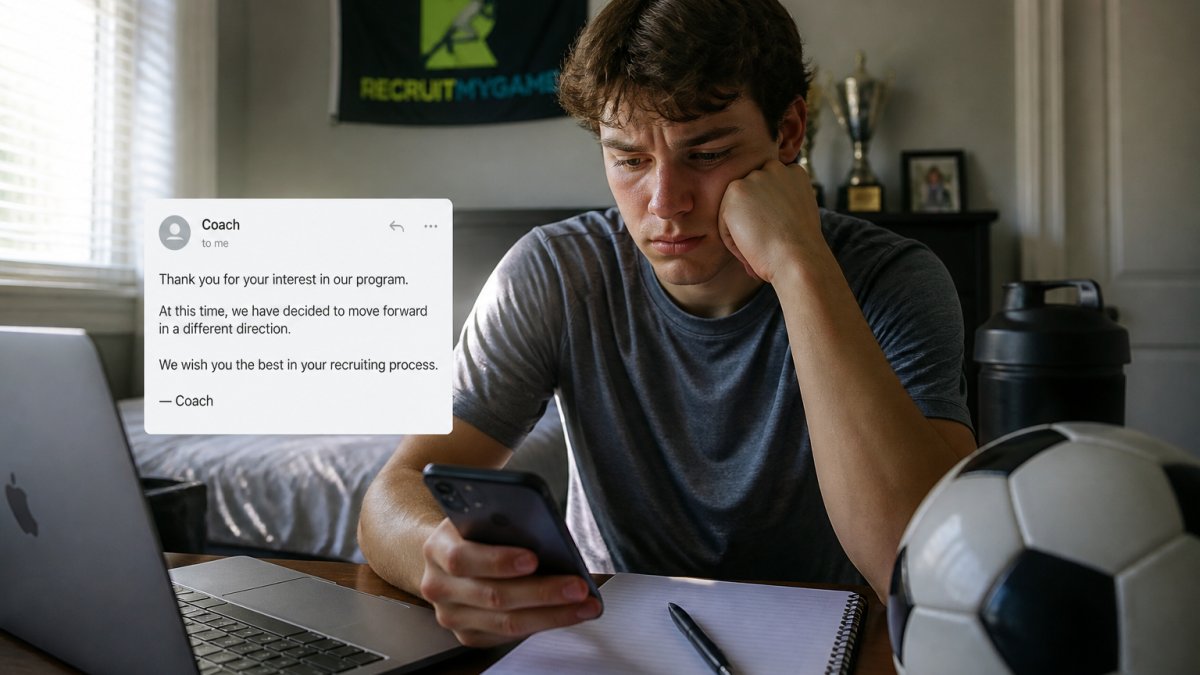
Getting college coach rejection emails stings, but those emails don't always mean what you think, because sometimes they're a genuine "no thanks" and other times they're just a coach managing their recruiting pipeline or signaling that the timing isn't right, and understanding that difference can completely change how you move forward.
We work with student-athletes navigating the college recruiting process, and one of the biggest mistakes we see is treating every negative-sounding email the same way.
Signs a College Coach Is Not Interested
A real rejection from a college coach typically has certain markers that distinguish it from a polite brush-off or a temporary "not right now." When a coach writes that they're "no longer pursuing your position," they're usually being direct about roster needs. If they mention that they've "committed their scholarships" or "filled their recruiting class," that's a pretty clear signal that the opportunity has closed for this recruiting cycle.
The tone matters too, because a coach who's genuinely uninterested often keeps their email brief and doesn't invite further communication, and if there's no opening for continued dialogue, that's a stronger signal than if they say something like "keep us updated on your progress" or "send us your fall film."
Distinguishing a Rejection from a Delayed Response
This is where things get tricky, and it's probably the most important distinction you can make. A delayed response is not the same as a rejection.
The key is reading what's actually written, not what you're afraid it means. Coaches who are genuinely interested will make that clear even if they're not ready to offer right now. Coaches who are genuinely not interested will be direct about it, even if they're polite about it.
Crafting Your College Coach Rejection Email Response
When you get a rejection email, your instinct might be to delete it and move on. That would be a mistake.
The best responses are short, gracious, and forward-looking. You're not trying to convince the coach they made a mistake or negotiate your way onto their roster. You're showing them that you're professional, you handle disappointment well, and you respect their decision.

Key Elements of a Professional Response
Your response email should include a few essential components that separate a strong reply from one that comes across as desperate or bitter, and you start by thanking the coach for their time and consideration, which acknowledges that they invested attention in evaluating you.
Next, express genuine appreciation for their feedback, even if it stung. If they gave you specific reasons for their decision (like roster needs or measurables), reference that in your response. This shows you actually read their email and took it seriously.
Keep your tone warm and professional. This isn't the place for humor that might not land or casual language that undermines your credibility. You want to sound like someone a coach would want to recruit if circumstances were different.
Ready-to-Send Response Templates for Different Situations
Template 1: General Rejection Response
Subject: Thank You for Considering Me
Coach [Name],
Thank you so much for taking the time to evaluate me as a recruit.
Thank you again for the opportunity to be part of your recruiting process.
Best regards, [Your Name] [Phone Number] [Email]
Template 2: Response to Roster-Specific Rejection
Subject: Thanks for Your Time
Coach [Name],
I appreciate you letting me know that you've filled your roster needs at my position.
If your situation changes or if you're interested in following my progress, I'd welcome staying in touch. Thanks again for considering me.
[Your Name] [Phone Number]
Template 3: Response When You Want to Keep the Door Open
Subject: Staying Connected
Coach [Name],
Thank you for getting back to me about my recruiting profile.
Would it be okay if I sent you an update after my senior season? I think you'll see significant improvement.
Thanks for your time and consideration.
[Your Name] [Phone Number]
College Recruiting Email Examples and Best Practices
The best recruiting emails are personalized, specific, and concise. Generic emails that could apply to any coach at any school get deleted or ignored. Coaches receive hundreds of recruiting emails every week, and they can spot a template from a mile away.
Start with a subject line that's clear and specific. "Recruiting Profile" or "Interested in Your Program" is vague. "2027 [Position] from [High School], Film Link Attached" tells them exactly what they're getting.
Keep your email short, three to four paragraphs maximum. Coaches are busy, and they appreciate efficiency. Include a link to your film, your stats, and your academic information. Make it easy for them to evaluate you without having to ask follow-up questions. Close with a clear call to action: "I'd love to hear your thoughts on my fit for your program" or "Please let me know if you'd like to see more of my film."
You can learn proven email strategies and templates by exploring anchor text for internal link, which covers how recruits are actually getting noticed by college coaches.
How to Follow Up with College Coaches After Rejection
Following up after a rejection is a delicate balance. You want to stay on a coach's radar without becoming annoying or desperate. The key is giving it time and having a legitimate reason to reach out again.
Wait at least two to three weeks before your first follow-up after a rejection. This gives the coach time to move on from the initial exchange and gives you time to gather something new to share, better film from recent games, improved test scores, or an update on your season performance. When you do follow up, lead with that new information rather than just checking in.
Your follow-up email should be brief and specific, referencing your previous correspondence so they know exactly who you are and what you've been working on, and you share your new film or updated stats while explaining why it's worth their time to look. Keep the tone positive and forward-looking, not pleading or frustrated.
If a coach hasn't responded to your follow-up after a couple of weeks, that's usually a signal to move on, since some coaches simply aren't going to engage and your energy is better spent on programs that are actively interested, though if a coach has shown interest in the past, following up once per season or after a significant accomplishment is reasonable. You can dive deeper into relationship-building strategies by reviewing best practices for managing coach communications, which covers how to maintain productive contact throughout your recruiting journey.
Avoiding Burned Bridges and Maintaining Relationships
The goal is to leave every interaction with a coach on positive terms, even if they're not recruiting you right now.
One way to maintain relationships after rejection is to stay visible without being intrusive. If you're at a tournament or showcase in their area, let them know you're coming and invite them to watch. If you make significant improvements or achievements during the season, send a brief update with your new film.
Understanding verified coach reviews and reputation management can help you see how coaches evaluate character and coachability, which directly impacts how they remember you after rejection and whether they'd consider you in the future.
What to Do After Receiving a College Coach Rejection
The first thing to do after a rejection is to take a breath and remember that one coach's decision doesn't define your recruiting journey. Rejection is part of the process for almost every recruit, regardless of talent level. Many college athletes got rejected by multiple programs before finding the right fit.
Then, refocus your energy on other programs. Update your recruiting profile with any new film, stats, or academic achievements. Reach out to other coaches who fit your profile and your goals.
Strengthening your overall recruiting profile is one of the most effective ways to move past rejection. You can make your profile coach-ready by polishing your stats, locking down your branding, and collecting verified reviews.
Moving Forward with Your Recruiting Strategy
Rejection is feedback, not a dead end. Recruits treat each rejection as an opportunity to refine their approach and improve their positioning.
RecruitMyGame helps student-athletes answer these questions by analyzing real roster data and coaching staff information to identify programs that actually have needs for your position. Rather than sending emails to teams that are already full, you can focus on programs where you have a realistic shot.
The reality is that rejection is part of every recruit's journey. What separates recruits who find success from those who struggle isn't avoiding rejection, it's how they respond to it and what they do next. Stay professional, keep learning, and keep working. The right program is out there.
Frequently Asked Questions
Should you reply to a college coach rejection email?
Yes, you should respond thoughtfully to a college coach rejection email. A professional, gracious reply demonstrates maturity and keeps the door open for future opportunities. Coaches remember how athletes handle disappointment, and a respectful response can lead to recommendations to other programs or reconsideration if circumstances change. Silence, by contrast, ends the relationship entirely and may leave the coach with a negative final impression.
How do you distinguish a college coach rejection from a delayed response?
A true rejection typically includes explicit language like 'we won't be moving forward,' 'we've filled our roster,' or 'you're not the right fit at this time.' A delayed response usually lacks such finality and may say things like 'we're still evaluating' or 'check back in a few months.' If a coach hasn't responded in 2-3 weeks and their initial email suggested they were still interested, a polite follow-up is appropriate. If they've explicitly stated they're not recruiting your position or have committed other athletes, that's a clear rejection.
Can you ask a college coach for feedback after a rejection?
You can politely ask, but keep expectations realistic. Some coaches will provide constructive feedback; others won't due to time constraints or liability concerns. Frame your request around your own growth: 'I'd appreciate any feedback on areas I can improve as an athlete' rather than challenging their decision. This approach shows maturity and genuine interest in development, which coaches respect. Even if they don't respond with detailed feedback, the respectful inquiry reinforces a positive final impression.
What should you do if a college coach doesn't reply to your recruiting email?
Wait 10-14 days before following up, as coaches receive hundreds of emails. Send one polite follow-up email referencing your original message and reiterating your interest in their program. Keep it brief and direct. If you still don't hear back after a second attempt, move your focus to other programs that are actively engaging with you. Non-response often signals they're not actively recruiting your position or profile right now, which is valuable information for your recruiting strategy.
Handling rejection from college coaches is about maintaining your professionalism and perspective while staying focused on finding the right fit. By responding thoughtfully, learning from feedback, and refining your recruiting strategy, you turn rejection into valuable information that helps you move forward. Start by polishing your recruiting profile to make sure you're presenting yourself as the best possible recruit to every coach who evaluates you.