 how-to
7 Digital Networking Benefits for High School Athletes
Last Updated: November 1, 2026
Quick Summary
Digital networking gives high school athletes control over the first impression coaches see, putting film, grades, and contact info in one place where staffs can find and evaluate them early. It also builds relationships before rosters fill and teaches professional communication that lasts beyond sports.
- Coaches start evaluating athletes long before they pick up a phone, so give them something to find.
- Your profile should show position, graduation year, film, academics, and contact info in one clean place.
- Assume every post is part of your recruiting file, because coaches do look.
- Spend an hour searching your own name and delete or privatize old posts that don't fit.
- Check the recruiting calendar for your sport before sending outreach, since dead periods can make you look unprepared.
Table of Contents
- Why Digital Networking Beats Waiting for Coaches to Find You
- How to Stand Out to College Coaches With a Profile That Does the Talking
- Social Media Best Practices for Student Athletes Who Want to Be Taken Seriously
- How to Email College Coaches Without Getting Ignored
- Recruiting Tools for Student Athletes That Turn Contacts Into Offers
- Build Your Recruiting Profile on RecruitMyGame
- Frequently Asked Questions
Why Digital Networking Beats Waiting for Coaches to Find You
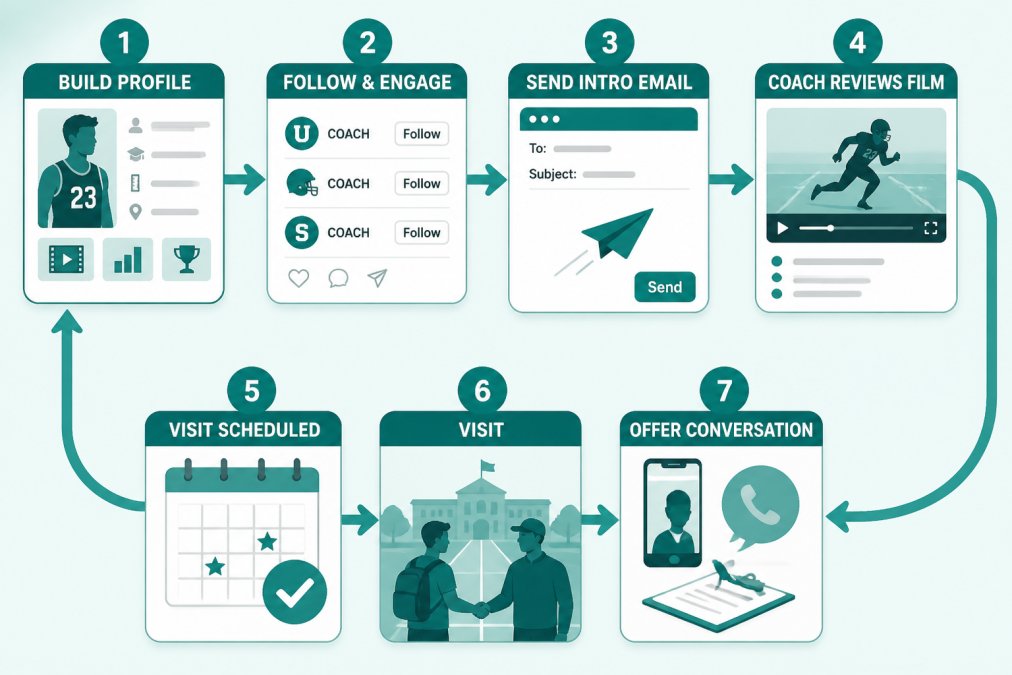
The old model assumed coaches would somehow stumble onto your highlight reel. Today, college staffs work from databases, referrals, and the profiles that land in their inbox.
The benefits of digital networking for high school athletes stack up quickly once you start:
- You control the first impression instead of hoping for one
- Coaches can find your film, grades, and contact info in one place
- You build relationships early, before rosters fill up
- You learn which programs actually have a need at your position
- You practice professional communication that helps long after sports end
Here's what most guides get wrong: they treat networking as a numbers game of mass emails, when it's really a small, consistent loop of building a profile, engaging genuinely, reaching out with context, and following up that turns a name into a recruit.
How to Stand Out to College Coaches With a Profile That Does the Talking
Standing out to college coaches starts with a profile that answers their questions before they have to ask them, because a coach scanning dozens of athletes wants your position, graduation year, film, academics, and contact details in one clean place. If a coach has to hunt for any of that, they move to the next name.
Your profile is your resume, so keep it current, keep it honest, and make the film easy to watch, because the athletes who stand out aren't always the most talented, they're the easiest to evaluate. For a deeper walkthrough, our guide on how to stand out to coaches covers the profile and outreach details that get replies.
A few things a coach-first profile gets right:
- Position and graduation year are visible immediately
- Film is short, clear, and labeled with your jersey number
- Academics and test scores are listed honestly
- Contact info is current and easy to copy
- The whole thing loads fast on a phone, because that's where coaches look
What most families miss is that coaches evaluate fit as much as talent. A profile that shows you understand a program's system and roster situation stands out far more than a generic highlight dump.
Social Media Best Practices for Student Athletes Who Want to Be Taken Seriously
Athletes who get recruited often keep their feeds clean and separate their personal and professional personas. A single screenshot can resurface years later, so it helps to assume every post could be seen by a coach.
This is where the digital footprint audit comes in, and it's the step almost nobody talks about.
Platform-specific strategy matters just as much as cleanup. On Instagram, your bio should include your position and graduation year, with pinned posts for your best film and a recent academic update. On X, engage with coaches and programs by reposting their content with thoughtful commentary, which shows you're paying attention without being pushy. On LinkedIn, connect with your high school coaches and teachers first, then gradually add college coaches you've already emailed, because a connection request without context can feel intrusive.
You don't need to be polished to the point of boring, you need to be intentional. Our breakdown of student athlete social media best practices goes deeper, but the short version is that your online presence should look like a young professional who happens to be great at a sport.
Each platform plays a different role in your recruiting file, so here is how to treat them.
| Platform | Role in recruiting | What to do |
|---|---|---|
| Showcase window for personality and highlights | Bio with position and graduation year, pinned film and academic update | |
| X | Engage with coaches and programs | Repost their content with thoughtful commentary |
| Professional handshake with coaches and mentors | Connect with high school coaches and teachers first | |
| TikTok, Snapchat, Discord | Where most of the risk lives | Treat as public even when it feels private |
How to Email College Coaches Without Getting Ignored
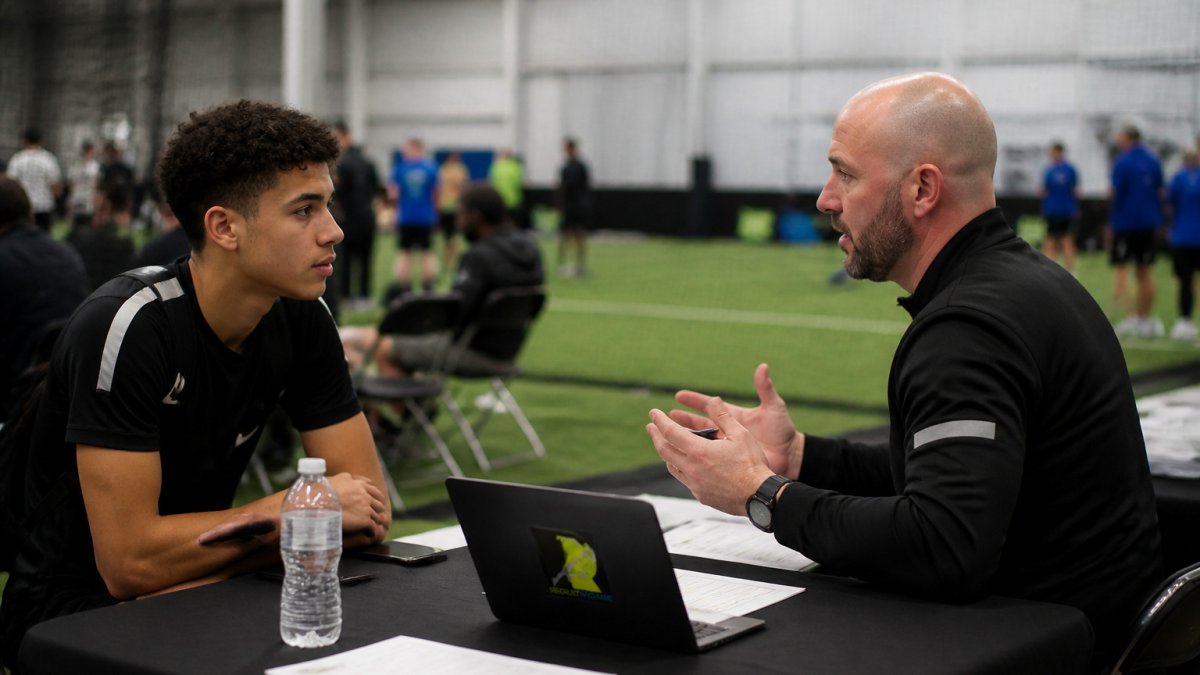
Emails to college coaches get ignored when they read like a form letter, so the ones that get answered are short, specific, and show you know something about that program, because coaches can spot a copy-paste blast in seconds. Mastering these communication protocols is just as vital as leveraging biosensing technology for athletes to ensure that your physical preparation aligns perfectly with the professional standards expected by collegiate programs.
Beyond timing, the ethical side of outreach matters more than most families realize. You should never misrepresent your height, your stats, or your academic record, because coaches verify everything and a single exaggeration can end a relationship before it starts. Avoid reaching out through personal channels like a coach's cell phone or social media DMs unless they've invited that kind of contact, since it can come across as pushy and in some cases violates school or athletic department policies.
Before you write, do your homework on the program, knowing the position coach's name, the roster situation, and why you're a fit, and our article on building relationships with college coaches early explains the groundwork that makes outreach land.
The athletes who get replies are the ones who treat outreach as a professional conversation rather than a sales pitch, knowing the rules, respecting the coach's time, and making it easy for the coach to say yes to the next step.
Recruiting Tools for Student Athletes That Turn Contacts Into Offers
Recruiting tools matter because contacts alone don't create offers. The right setup helps you organize your film, academics, and coach communication in one system instead of juggling spreadsheets and a dozen browser tabs.
If you want to see how a full set of these tools fits together, our coach-first recruiting system lays out the details.
Build Your Recruiting Profile on RecruitMyGame
Building your recruiting profile on RecruitMyGame means putting your film, academics, and contact details into a system that helps you reach the programs that actually have a need for your position, rather than blasting the same email to every school on a list.
Here's how it works in practice. When you're ready to choose a platform, our guide on what makes a recruiting platform worth it breaks down exactly what to look for.
The benefits of digital networking for high school athletes only pay off when you have a system behind them. RecruitMyGame gives you that system, from a personalized web address and QR business cards to support for 20+ sports.
Frequently Asked Questions
How can high school athletes use social media for recruiting?
Treat your social accounts as a public recruiting portfolio rather than a personal diary. Post highlight clips with clear context like position, graduation year, and measurable stats, then keep the rest of your feed clean enough that a college coach scrolling through it sees a disciplined athlete. Follow the programs you are interested in, engage with their content in a genuine way, and use direct messages to introduce yourself before you send a formal email. Coaches do check, so make sure your bio names your sport, position, and graduation year in the first line.
Why is digital networking important for college sports recruitment?
College coaches work with limited budgets and tight travel schedules, so most of their first impressions now happen on a screen. Digital networking lets a high school athlete reach a coach directly without waiting for a showcase invite, and it gives the coach a way to verify who you are through film, academics, and references. It also builds a longer relationship than a single camp appearance, which matters when roster spots open up late in the recruiting process.
What are the risks of social media for student-athletes?
The biggest risk is that a coach finds something you posted years ago that contradicts the disciplined athlete you are presenting now. Public arguments, party photos, and complaints about teammates or coaches can end a recruitment before it starts. Privacy settings help, but they are not a guarantee because screenshots travel. Run a digital footprint audit on your own accounts, remove anything you would not want a coach or admissions officer to see, and keep separate private accounts for close friends if you need a space to vent.
What should a high school athlete include in their digital profile?
Start with the basics a coach needs to sort you: name, graduation year, position, height and weight, GPA, and a link to your film. Add your academic interests, any awards or all-conference honors, and a short paragraph on what kind of program you are looking for. A verified coach or teacher review adds credibility that a self-written bio cannot. Keep the film link at the top of the page so a coach does not have to hunt for it, and update the profile every season as your stats and highlights change.
The hardest part of recruiting isn't talent, it's getting in front of the right coaches at the right time. RecruitMyGame helps you do exactly that with AI-powered college matching, verified coach reviews, and recruiting analytics that show who's actually paying attention. Get started with RecruitMyGame and turn your digital networking into real conversations with the programs that fit.