 how-to
How to Stand Out to Coaches: A 2026 Recruiting Guide
Table of Contents
- Why Proactive Communication Beats Waiting to Be Discovered
- What Do College Coaches Look for in Recruits Beyond Talent?
- College Recruiting Email Templates That Actually Get Replies
- How to Create a Highlight Reel for College Coaches That Demands Attention
- How to Stand Out to Coaches at Showcases and Tournaments
- Managing Your Digital Footprint and Personal Brand
- How to Stand Out to Coaches: The Parent's Role and Mental Toughness
- Frequently Asked Questions
Last Updated: September 15, 2026
Why Proactive Communication Beats Waiting to Be Discovered
The uncomfortable truth about college recruiting is that talent alone rarely gets discovered. According to NCAA recruiting guidelines, coaches face strict contact periods and limited evaluation budgets, which means they rely heavily on athletes who reach out first. Learning how to stand out to coaches starts with one shift: stop waiting for an email that may never come.
At RecruitMyGame, we built our platform around that reality. The athletes who land roster spots are almost always the ones who communicate early, follow up consistently, and target programs with genuine positional needs.
Here's what most families get wrong: they treat recruiting like a lottery instead of a job search. Coaches are evaluating dozens of prospects at once, and the ones who make it easy to say yes get the offers.
What Do College Coaches Look for in Recruits Beyond Talent?
College coaches look for three things beyond raw talent: coachability, character, and work ethic. A player who listens, adjusts, and shows up prepared will beat a more gifted athlete who coasts on ability.
Intangible Qualities: Coachability, Character, and Work Ethic
A common mistake is assuming your highlight reel does all the talking. It doesn't. Coaches want to know how you respond to criticism, how you treat teammates, and whether you'll still be grinding in February when the season feels long.
When you write to a coach, mention a specific moment where you adjusted mid-game or bounced back from a bad performance. That signals coachability better than any statistic. Character shows up in how you talk about former coaches and teammates, so keep every message positive and team-first.
College Recruiting Email Templates That Actually Get Replies
A recruiting email works when it is short, specific, and easy to act on. Coaches skim dozens of messages a day, so your first two sentences must earn the rest of their attention. The difference between a reply and a delete usually comes down to three things: a filterable subject line, a program-specific reason for interest, and a clear ask.
The Subject Line Is the Whole Game
Most coaches sort their inbox by position and grad year before they read a single word. Your subject line should read like a database entry, not a greeting. A reliable format is:
[Position] | [Grad Year] | [Height/Weight] | [City, State]
For example: Outside Linebacker | 2028 | 6'2" 215 | Austin, TX. That single line tells a coach whether you fit a roster need before they open the message. Avoid vague lines like "Recruit Looking at Your Program," "Hey Coach," or a blank subject, those get filtered out or ignored.
A Template You Can Adapt
Subject: [Position] | [Grad Year] | [Height/Weight] | [City, State]
Coach [Last Name],
My name is [Full Name], a [grad year] [position] at [High School]. I'm interested in [Program] because [specific reason tied to their system or staff].
Quick facts: [Height/Weight], [key stat], [GPA/test score if applicable]. My highlight film is linked below.
Are you recruiting [position] for the [grad year] class? I'd welcome the chance to talk.
Thanks for your time, [Name] | [Phone] | [Email] | [Film Link]
Keep the body under 150 words. Anything longer reads like a form letter, and coaches can spot a copy-paste blast in the first line.
Timing, Follow-Ups, and Reply Expectations
Send your first email during a contact period when coaches are actively building boards, typically late spring through summer before your junior year, and again in the fall (NCAA Recruiting - NCAA.org). Avoid sending during dead periods when coaches cannot respond.
Follow up once every two to three weeks if you don't hear back. Keep it brief and add something new each time, such as an updated stat, a recent game result, or a new film clip. Never send the same message twice, and never write to a program that has already filled your position for your grad year.
A common pattern is that athletes send one email, get no reply, and quit. Most coaches simply cannot respond to every message, so silence is not rejection, it is a signal to follow up with new information. Persistence with substance is what separates recruits who get on a board from those who don't.
| Email Element | Do This | Avoid This |
|---|---|---|
| Subject line | Position, grad year, key measurables | "Hey Coach" or blank subjects |
| Opening | Program-specific reason for interest | Copy-paste generic praise |
| Body | Film link, GPA, one standout stat | Long paragraphs about your history |
| Follow-up | New update every 2-3 weeks | Repeated identical messages |
| Ask | One clear question ("Are you recruiting my position?") | Vague "hope to hear from you" |
What to Avoid
Three mistakes kill replies faster than anything else: attachments instead of links (many athletic department filters block them), misspelled coach names, and asking questions already answered on the program's recruiting page. Do your homework first, then write like a person who did it.
How to Create a Highlight Reel for College Coaches That Demands Attention
A highlight reel for college coaches should run two to four minutes and open with your best three plays (ncaa.org). Coaches decide within the first 30 seconds whether to keep watching, so front-load the footage that shows your position-specific skills.
What most guides miss is context. Label each clip with the opponent, date, and your jersey number. Coaches evaluating game film want to see how you perform against real competition, not just isolated highlights. Include full-speed plays, not just slow-motion replays, and keep music minimal so coaches can hear the game.
If you play multiple positions, build a separate reel for each. A coach recruiting a specific position needs to see you doing that job, not a montage of everything you can do. Pair every reel with verified stats and academic information so a coach can evaluate you in one sitting.
How to Stand Out to Coaches at Showcases and Tournaments
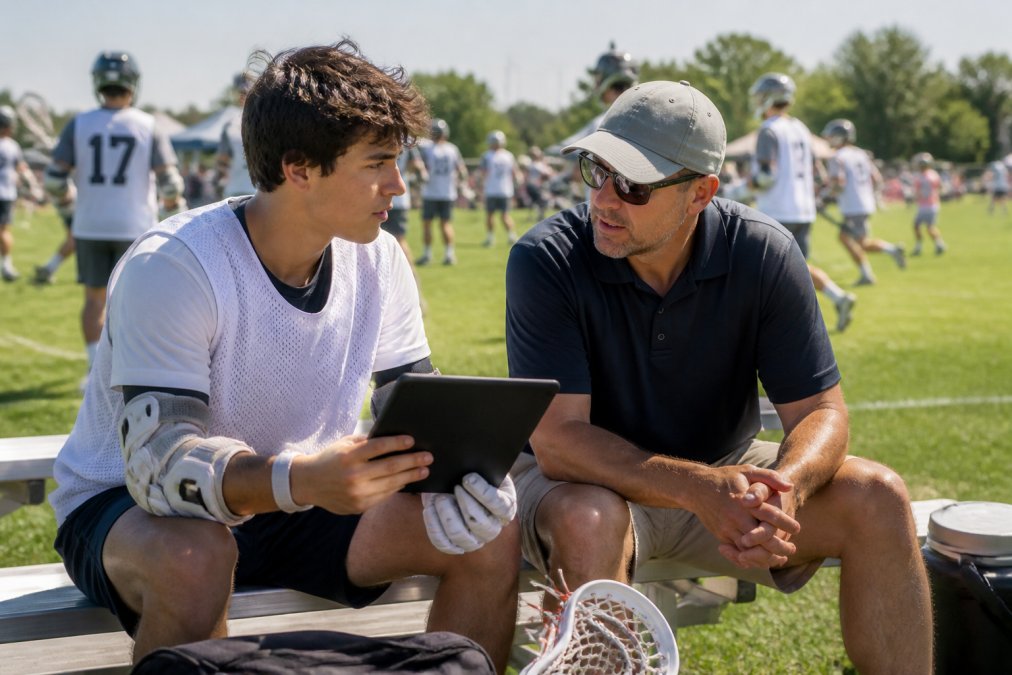
Showcases and tournaments are where recruiting moves from email to eye contact. Coaches attend to evaluate athletic profile and intangible qualities in person, so how you carry yourself matters as much as how you play. The athletes who get the most out of these events treat them like a coordinated campaign, not a weekend of games.
Before the Event: Build the Coach List
Weeks before the showcase, pull the list of programs attending and cross-reference it against your target schools. Email each coach a short note: your position, grad year, jersey number, field/court number, and game times. That single email is what puts you on a coach's personal schedule, otherwise you're one of hundreds of anonymous players.
If the event publishes a schedule, map out which coaches are likely to watch which games.
During the Event: Be Findable and Coachable
After the Event: Close the Loop
The Multi-Channel Handoff
Managing Your Digital Footprint and Personal Brand
How to Stand Out to Coaches: The Parent's Role and Mental Toughness
Frequently Asked Questions
What do college coaches look for in a recruit beyond athletic ability?
Coaches evaluate intangibles just as heavily as physical traits. They watch for coachability, how you respond to mistakes, and whether you make teammates better. Work ethic shows in how you warm up and how you handle being subbed out. Character matters too: coaches talk to your teachers and club coaches. A recruit with average metrics but elite attitude often beats a more talented player who sulks. Your goal is to make them believe you will improve their program culture, not just their roster.
How can I use social media to stand out to coaches?
Treat your social media as a public resume. Post game film clips with context (opponent, score, your stats), academic achievements, and training updates. Keep your profiles clean: coaches search your name and may pass on recruits with offensive posts. Follow target programs and engage thoughtfully with their content. Do not DM coaches asking for offers; instead, use email for formal recruiting contact. A consistent, positive online presence reinforces the personal brand you build through your recruiting emails and highlight reel.
How early should I start reaching out to college coaches?
Start researching programs and building your athletic profile as early as freshman year, but understand NCAA contact rules. Coaches cannot respond to most recruiting communication until June 15 after your sophomore year for most sports. Before that, you can send introductory emails and film, but expect limited replies. Use the early years to improve your metrics, take challenging classes, and attend showcases. By junior year, your outreach should be consistent and personalized to programs with real roster needs at your position.
What should I include in my athletic recruiting profile?
A strong profile includes your grad year, position, height, weight, measurable athletic metrics (40-yard dash, vertical, etc.), GPA, test scores, and a link to your highlight reel. Add contact information for your coaches and a brief academic statement. Keep it updated each season. Coaches want to see verified data, so include combine results or showcase measurements. A QR business card or personal web address makes it easy for coaches to access your profile instantly at tournaments. Make every field count; incomplete profiles get skipped.