 how-to
5 Ways Coaching Turnover Hits Recruits Hardest
Last Updated: November 1, 2026
Quick Summary
Coaching turnover hits recruits hard because a new head coach can change the playbook, the staff, and who gets a scholarship. A verbal commitment is a promise to one coach, so it may not carry over to the new staff. Athletes should confirm the facts, get offers in writing, and ask the new staff directly how they will be handled.
- A verbal commitment is a promise to a specific coach, so it may not carry over to new staff.
- New staffs can review, reduce, or withdraw scholarship offers after a coaching change.
- Write down every offer and promise with the date, coach, and whether it was verbal or written.
- Ask the new staff directly whether they will honor your offer and when you can expect an answer.
- Keep other schools informed and open to reopening conversations if your situation changes.
Table of Contents
- Why a New Head Coach Changes More Than You Think
- What to Do When a College Coach Leaves
- How to Evaluate a College Coaching Staff Before You Commit
- Questions to Ask College Coaches During a Staff Change
- A College Coach Email Template for Recruits Facing a Transition
- Your Next Move: Protecting Your Scholarship Through a Staff Change
- Frequently Asked Questions
Why a New Head Coach Changes More Than You Think
Coaching turnover hits recruits harder than most people expect, and it often happens faster than anyone plans for. When a head coach leaves, the whole program shifts. The playbook changes. The staff changes.
A coach takes a new job, and suddenly the athlete who was promised a spot is talking to someone who has never heard their name. That is the reality of turnover, and it is why knowing what to watch for matters so much.
What Happens to Your Verbal Commitment
A verbal commitment is not a signed contract. It is a promise made to a coach, and that promise often lives or dies with the person who made it.
Here is what this usually looks like:
- The new staff may not feel bound by the old staff's offers
- Scholarship offers can be reviewed, reduced, or withdrawn
- Your spot on the roster may be reconsidered based on the new coach's needs
The National Letter of Intent works differently. Before you sign it, make sure you understand how the terms apply to your situation. Before you sign anything, ask the coach directly how your commitment will be handled.
The Emotional Toll on Athletes and Families
Turnover is hard on the athlete, but it is also hard on the whole family. Parents may feel like they have to start the process over. Siblings and friends may ask questions you do not have answers to yet.
This stress is real, and it is normal. Taking time to talk through your options with your family, and with your coaches at home, can help you think clearly.
What to Do When a College Coach Leaves
Start by confirming the facts before you react to a rumor, because coaches leave for a lot of reasons and not every departure actually changes your situation.
Once you know what happened, work through these steps in order rather than firing off a panicked email the same afternoon:
- Write down every offer and promise you received, including the date, the coach who made it, and whether it was verbal or in writing, because memory gets fuzzy fast and a written record keeps you honest with yourself about what was actually promised.
- Reach out to the program's director of recruiting operations or the position coach who is still on staff, since those are the people who usually keep the recruiting board updated while a search is underway.
- Ask directly whether the new staff plans to honor the existing scholarship offer, and ask for a date by which you can expect an answer so you are not left waiting indefinitely.
- Keep your other options open, which means telling the other schools recruiting you that you are still interested and asking whether their offer has a deadline, because a coaching change at one school is a legitimate reason to reopen a conversation elsewhere.
- Loop in your high school coach and your club coach, since they often have relationships with college assistants and can make a call on your behalf that carries more weight than an email from a recruit.
Do not wait for the school to contact you first, because new staffs inherit a recruiting board with hundreds of names on it and the athletes who reach out early and politely are the ones who get remembered.
How to Evaluate a College Coaching Staff Before You Commit
Before you commit to any program, look at the staff the way an athletic director would, because the questions that matter to a recruit are the same ones that matter to the people who hired the coach in the first place. If you want to dig into this before you commit, our guide on how to verify college coach roster stability walks through exactly how to check whether a staff is settled.
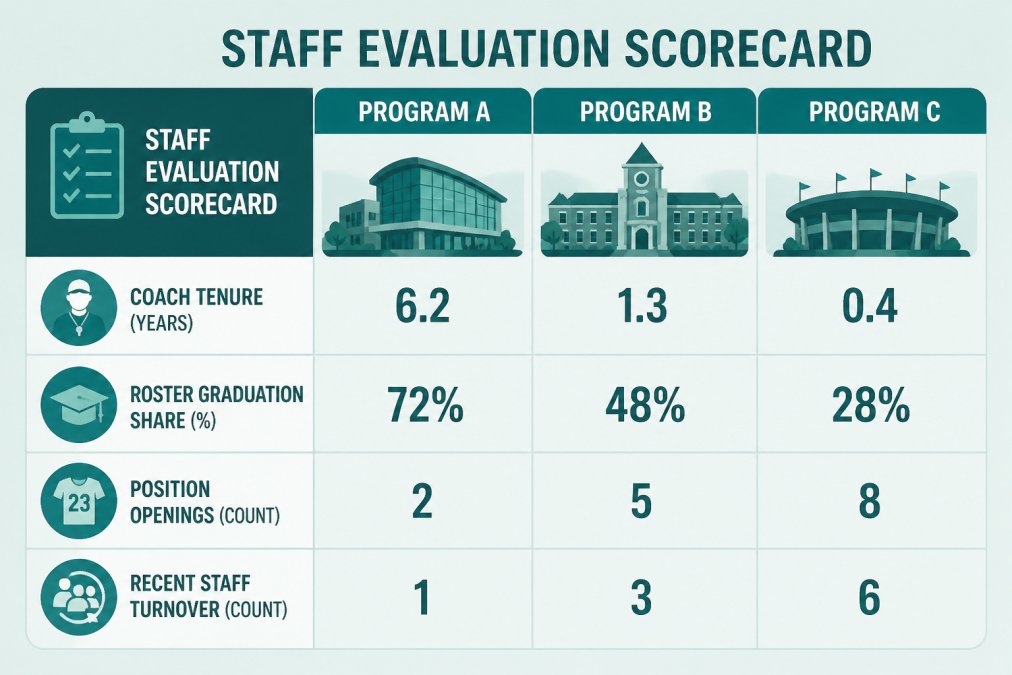
Start by checking a few key areas:
- How long the head coach has been in the job, and whether the contract runs long enough that the school is clearly committed to him
- How many assistant coaches have left in the past few seasons, since assistant turnover is often a leading indicator of head-coach turnover
- Whether the staff is actively recruiting players at your position right now, which you can usually tell from the offers listed on recruiting sites and from whether the position coach is following you and your teammates
- How many players at your position are graduating or entering the transfer portal, because the portal has changed roster math and a program that loses two starters at your spot is a very different opportunity than one that returns everyone
Staff stability and tenure matter because they show whether a coach can build a program over time, and a head coach with several years in the job usually has more time to develop players and keep recruiting consistent.
The angle most recruiting advice skips is the long-term one, and it is worth thinking through carefully. Athletes who stay through a coaching change may end up with a different relationship with their position coach than athletes who transfer, and the outcome depends heavily on the program.
Before you commit, compare what matters most when a coaching staff is in flux.
| Check | What to look for | Why it matters |
|---|---|---|
| Head coach tenure | Several years in the job | Time to build players and recruiting consistency |
| Assistant coach departures | Few exits in recent seasons | Frequent exits often come before head-coach change |
| Active recruiting at your position | Offers and position coach following you | Shows the staff actually wants players at your spot |
| Graduating or transferring players | Few departures at your position | Opens playing time and roster room |
Questions to Ask College Coaches During a Staff Change
If a program is going through a change, you have every right to ask direct questions. Coaches expect this, and serious programs respect athletes who come prepared.
Good questions to ask include:
- Will my scholarship offer be honored by the new staff?
- Has the staff already decided how my position fits into their plans?
- How many players are you planning to bring in at my position this year?
- What is the timeline for finalizing the roster?
Write down the answers. If a coach avoids a clear question, treat that as information.
A College Coach Email Template for Recruits Facing a Transition
When a coach leaves, a short, clear email can help you get answers quickly. Keep it polite and to the point.
Subject: Following Up on My Recruitment Status
Hello Coach [Last Name],
I hope you are doing well.
Send this email only after you have confirmed the staff change, and follow up if you do not hear back within a week or so.
Your Next Move: Protecting Your Scholarship Through a Staff Change
A coaching change is stressful, but it does not have to derail your recruiting. Stay organized, ask direct questions, and keep your options open until you have clear answers. Track every offer, every conversation, and every deadline in one place.
RecruitMyGame can help you stay on top of it. Use RecruitMyGame's roster and coaching stability analysis to find programs that truly need your position, and try Super Charged Pro to organize your film, your academics, and your coach communications in one place.
Frequently Asked Questions
How does a coaching change affect college recruits?
A coaching change can reshape the whole recruiting picture. New head coaches often bring their own priorities, which means the position you were recruited for may suddenly look less important. Some new staffs honor existing commitments, while others reevaluate the roster from scratch. The biggest risk is losing the person who actually sold you on the program. Ask the new staff directly how they view your position and whether your scholarship offer is still on the table.
Can a recruit change their commitment if a coach leaves?
Often, yes. A verbal commitment is not a binding contract, and a coaching change is one of the most common reasons recruits reopen their search. Signing a National Letter of Intent is different, since it is binding once signed, so know where you stand before you sign anything. Talk to your family, your high school coach and the new staff before making any move. Get any change in your scholarship terms in writing.
What should recruits do when their primary recruiter leaves?
Reach out to the new head coach and ask for a call or video meeting within the first few weeks. Briefly explain who you are, what you have done so far and why you chose the program. Send your highlight film and recent stats so the new staff can evaluate you quickly. Keep your other options warm while you wait, because staffs can take time to settle in and decide on their roster.
How can athletes evaluate coaching staff stability?
Look at how long the head coach and position coaches have been at the school, and how many assistants have turned over in the last few seasons. High turnover is not automatically a red flag, but a pattern of constant change can signal program instability. Check how many players at your position are graduating soon, since that shapes playing time. Platforms like RecruitMyGame track coach tenure and roster graduation timelines to make this easier to see.