 listicle
7 Tips for High School Athlete Marketing That Work
Table of Contents
- Why High School Athlete Marketing Matters More Than Ever
- 1. Build a High School Athlete Recruiting Profile That Coaches Actually Read
- 2. How to Make a Recruiting Highlight Video Coaches Will Watch to the End
- 5. Know the NIL and NCAA Rules Before You Post
- 6. Measure What's Working in Your Athlete Marketing
- Conclusion: Start With One Step Today
- Frequently Asked Questions
Last Updated: October 12, 2026
Why High School Athlete Marketing Matters More Than Ever
College coaches now build their recruiting boards from what they can find online long before they ever pick up a phone, and that shift has completely changed what it takes to get noticed. At RecruitMyGame, we have watched how much of the recruiting conversation now starts with a search, a profile, or a highlight clip, so the work you put into your own visibility genuinely matters.
Here is the hard truth most families learn too late: coaches are not searching for hidden gems the way the old recruiting stories suggest. They are searching for athletes who make it easy to say yes. When your profile is complete, your film is tight, and your messages are professional, you become the easy yes.
That is the throughline for everything below. Marketing yourself is not about hype or bragging. It is about removing friction for the person doing the hiring, which in this case is a college coach with limited time and a roster to fill.
1. Build a High School Athlete Recruiting Profile That Coaches Actually Read
A high school athlete recruiting profile is a single, organized page that tells a coach who you are, what you play, how you perform, and how to reach you, all in under a minute of reading. Most profiles fail because they read like a résumé for a job nobody applied for: vague, cluttered, and missing the basics.
What to Include in Your Profile
Your profile needs the details a coach checks first, in a scannable order, because a common mistake is burying the most important information under a wall of text about your love for the game, so lead with facts and let your story fill in the rest.
- Position and graduation year at the very top, since coaches filter by both
- Height, weight, and dominant side so a coach knows if you fit the frame they recruit
- Academic information, including GPA and any test scores, because eligibility comes before everything else
- A clear headshot and one strong action photo, not a phone snapshot from the bleachers
- Contact details for you and a parent or coach who can vouch for you
- A short personal story that shows teamwork, leadership, and how you handle adversity
What most guides miss is that your profile is not really about you. It is about whether a coach can picture you on their roster in about thirty seconds. Write it for that person, not for your friends.
2. How to Make a Recruiting Highlight Video Coaches Will Watch to the End
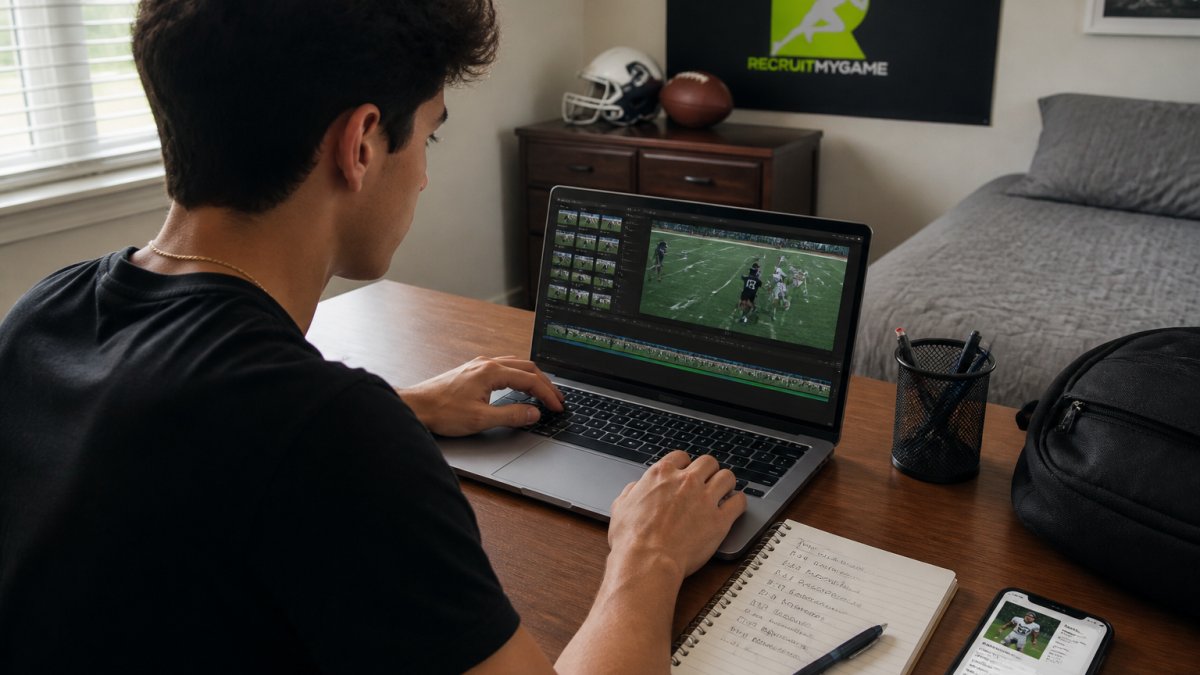
A recruiting highlight video is a short, focused clip reel, usually two to four minutes long, that shows your best plays in game situations with clear context for each one.
Coach [Last Name],
My name is [Your Name], and I am a [Position] in the [Graduation Year] class at [High School] in [City, State].
Send your first email early in your junior year, then follow up once every few weeks with a genuine update, a new clip, or a note about a game. Do not send the same message twice.
5. Know the NIL and NCAA Rules Before You Post
Name, image, and likeness rules have opened real opportunities for athletes, but they also come with eligibility traps that vary by state and by level of competition, and the last thing you want is to lose a season because you signed the wrong piece of paper.
The first thing to understand is that there is no single national rulebook for high school NIL. Each state high school athletic association sets its own guidelines, and some are far more restrictive than others.
When a brand or a local business reaches out, ask what they want, get it in writing, and never sign on the spot.
One more thing that trips up a lot of families: NIL is not the same as being paid to play. You are being compensated for the use of your name, image, or likeness, which means the deal should involve some kind of promotion, appearance, or content creation. If someone offers you money with no clear marketing purpose attached, that is not an NIL deal, and it could be a recruiting violation in disguise. When in doubt, ask your athletic director or a parent to read the agreement before you sign, and remember that protecting your eligibility is always worth more than a quick payday.
6. Measure What's Working in Your Athlete Marketing
You cannot improve your recruiting without knowing what coaches actually respond to, and most athletes never track a single number, so keep a basic log of what you send, who opens it, and who replies, then double down on what works.
Track your profile views, your video plays, and your coach responses in one place so you can see patterns. If one version of your email gets replies and another gets silence, you have your answer. If your film gets watched but no one follows up, your video may be working while your profile is not.
| What to Track | Why It Matters | What Good Looks Like |
|---|---|---|
| Profile views | Shows whether coaches find you | Steady growth each month |
| Video plays | Shows whether your film lands | High play-through rate |
| Coach responses | Shows whether your outreach works | Replies, not just opens |
| Follow-up timing | Shows whether persistence pays | Consistent, spaced outreach |
This is where a tool like RecruitMyGame earns its place. Our platform shows you recruiting analytics like visits and video plays, so you can see which programs are actually engaging with your profile instead of guessing.
Conclusion: Start With One Step Today
The gap between athletes who get recruited and athletes who get overlooked is almost never talent. It is organization, consistency, and the willingness to treat your own recruiting like a project instead of a hope. Pick one step from this guide and do it this week, whether that is building your profile, cutting your film down to three minutes, or sending your first coach email.
At RecruitMyGame, we built our platform to handle the parts that eat up your time and energy. Our AI-powered college matching identifies programs with real roster needs for your position, our verified coach and teacher reviews give you honest insight into a program, and our professional marketing tools, including a personalized web address and QR business cards, help you stand out to the right coaches.
Frequently Asked Questions
What should a high school athlete include in a recruiting profile?
A strong recruiting profile covers your basic details (name, graduation year, position, height, weight), academic information like GPA and test scores, contact info, and a link to your highlight video. Add measurable athletic achievements, sport-specific benchmarks, and a short personal story that shows teamwork and leadership. Keep it updated each season so coaches see current stats. A platform like RecruitMyGame lets you build a verified profile with a personalized web address and QR business card that coaches can scan at showcases.
How often should athletes contact college coaches?
Send an introductory email early in your junior year, then follow up every two to three weeks with new film, updated stats, or a note about an upcoming game. Coaches are busy, so one thoughtful message beats five generic ones. Always personalize each email with the coach's name and a specific reason you're interested in their program. If you don't hear back after two follow-ups, move on and focus your energy on programs that show genuine interest.
What are the NCAA social media rules for student-athletes?
The NCAA doesn't restrict what you post as a regular student, but once you sign a National Letter of Intent, your social media activity can affect your eligibility if it involves pay-for-play or improper benefits. Before you accept any NIL deal, check your state's high school association rules and your future college's compliance office. Never post about money, gifts, or deals without approval. Keep your accounts clean and professional because coaches and admissions officers do look.
How can high school athletes use social media to get noticed by college coaches?
Pick one or two platforms where your sport's community is active, then post consistently. Share highlight clips, training updates, and game results with a unique hashtag that includes your name and graduation year. Tag your school and any relevant sports organizations. Engage with coaches' posts and other athletes in your sport. Keep your bio updated with your position, grad year, and a link to your recruiting profile. Coaches search hashtags and watch film on social media more than most athletes realize.
How do you make a highlight video that coaches will watch?
Keep it under five minutes and put your best plays in the first 30 seconds. Label each clip with the date, opponent, and your jersey number. Use game film, not practice footage, and show a mix of your position-specific skills. Add a simple intro card with your name, position, graduation year, and contact info. Upload to YouTube or a recruiting platform and send the link in your coach emails. Coaches want to see what you do in real game situations, so skip the music and flashy edits.